
artwork
2026
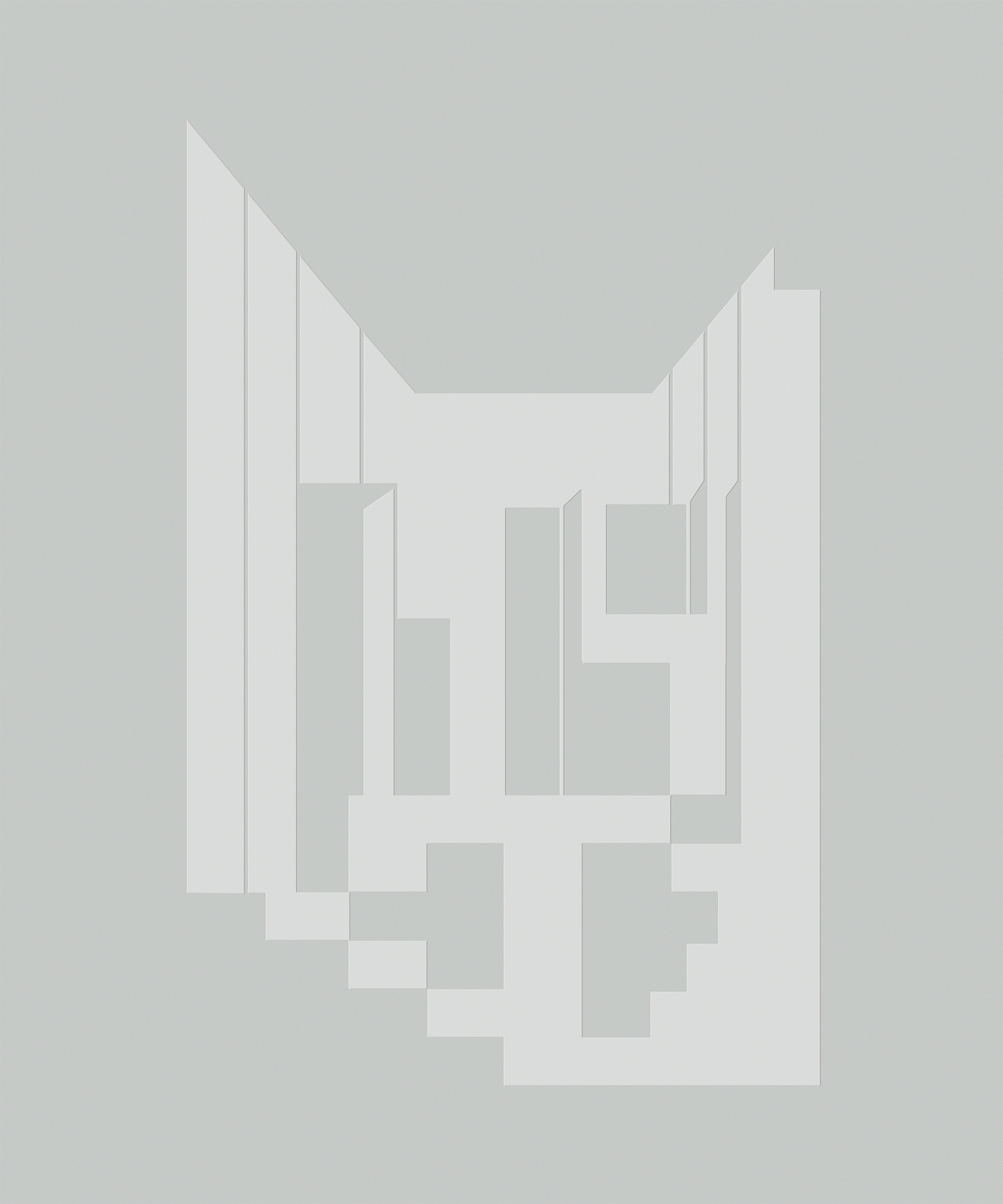
Excedere
engraving on glass
50cm x 60cm x 0,4cm
Excedere, from the Latin meaning “to step outside”, “to go beyond”, “to exceed”. This piece is based on a drawing of central perspective made in 1642 by Jean Dubreuil, whose lines I have reworked. The grid becomes a passage into the room, windows and doors slip away, and the lines no longer have vanishing points. Different elements come together. The idea here is to transgress perspective, to disrupt its rules and allow the mind to construct its own arrangement, without imposing a single reading of space, without the grid restricting how it unfolds.
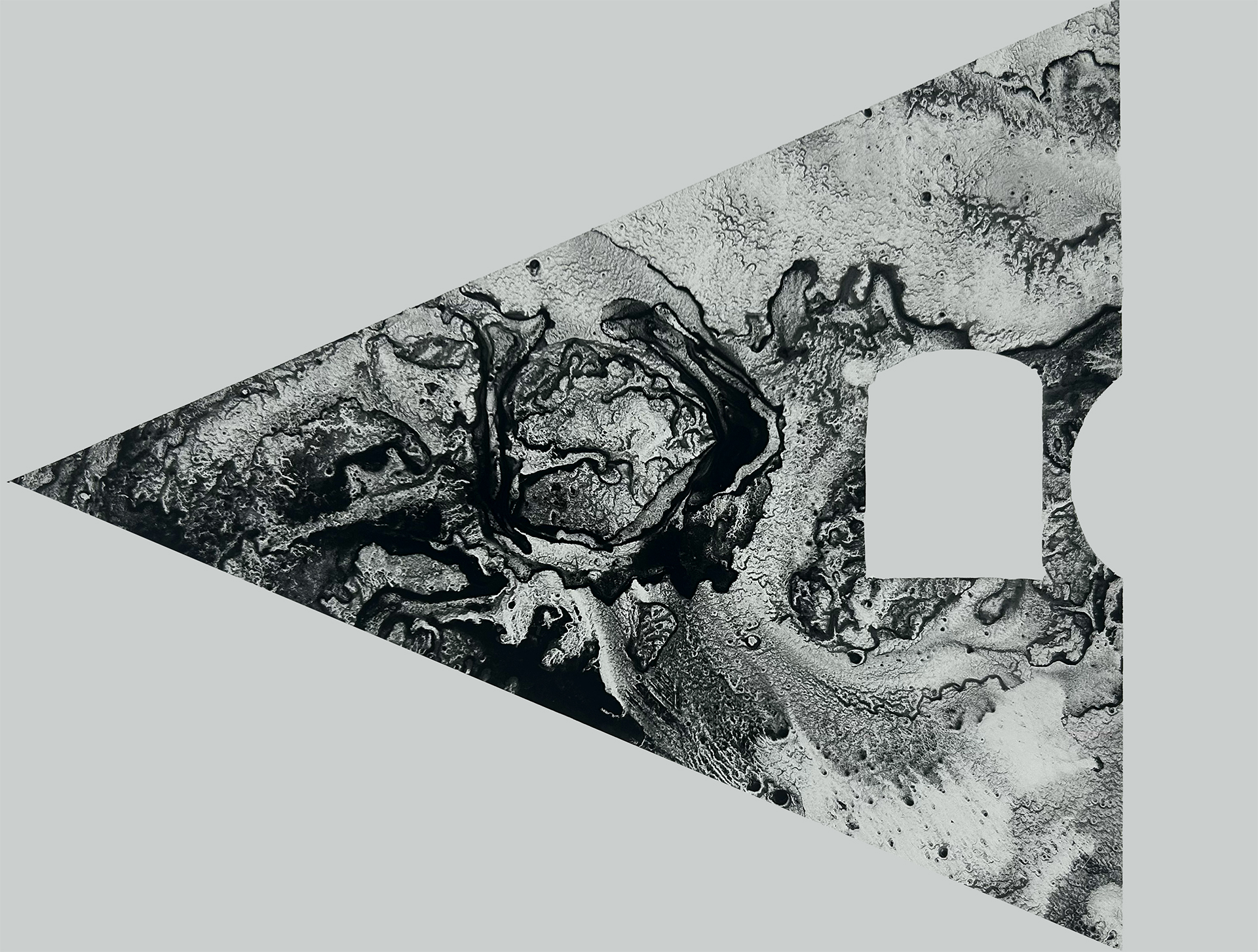
Foramen elementare
grisaille on glass
metallic acrylic flat colour
20cm x 25cm x 0,4cm
Foramen vient du latin forāre, « percer, trouer, perforer », et désigne une ouverture pratiquée dans la matière. Elementare renvoie à ce qui constitue les premières parties d’un ensemble. Cette pièce part d’un triangle, percé à son tour par un rectangle et des cercles. Les formes géométriques, habituellement utilisées pour construire, servent ici à ouvrir, à retirer de la matière. Un jeu de passages se met en place, où chaque forme en traverse une autre, modifiant ses contours et sa lecture. La construction se fait ainsi autant par ce qui reste que par ce qui disparaît. Pour tenir, garder l'amour du jeu.
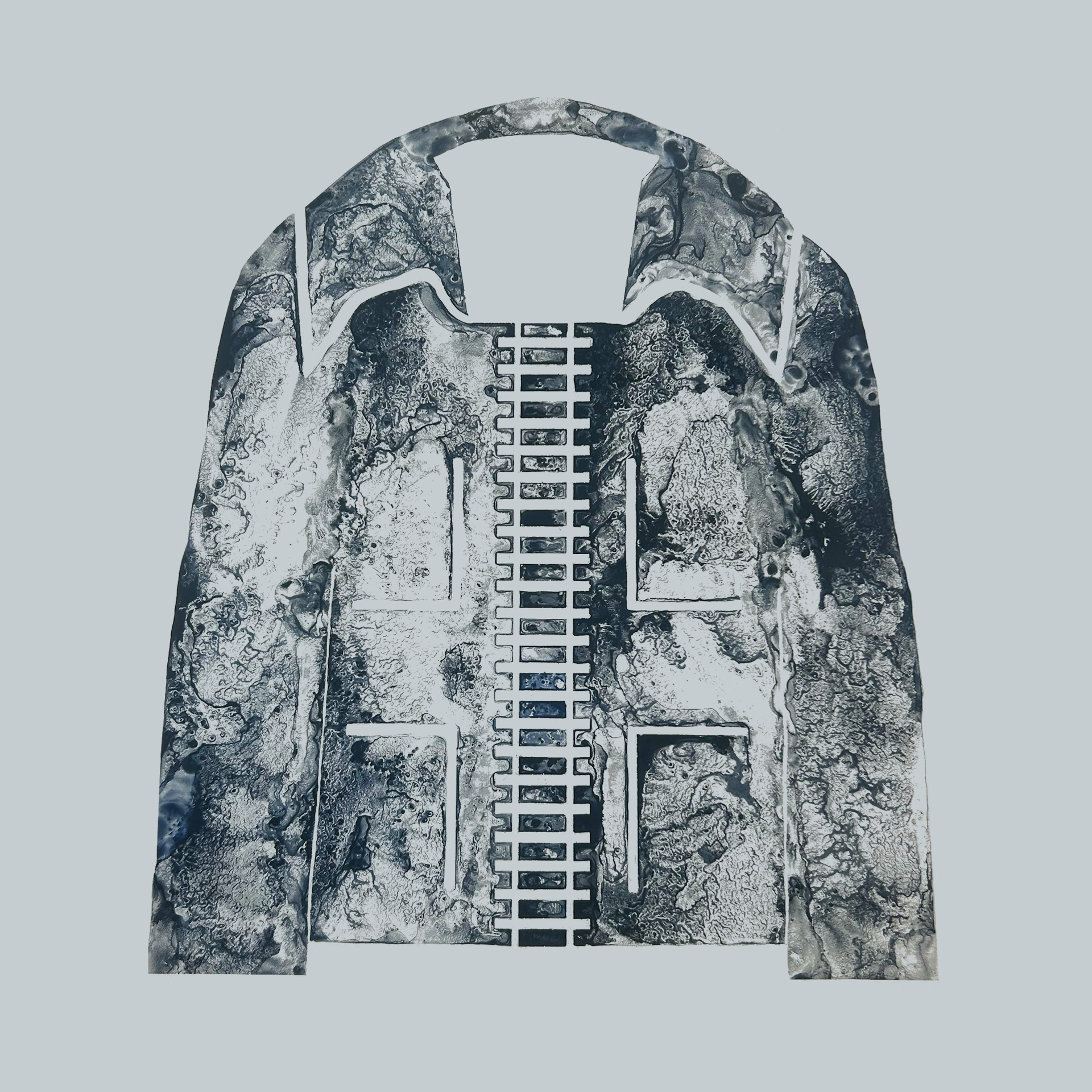
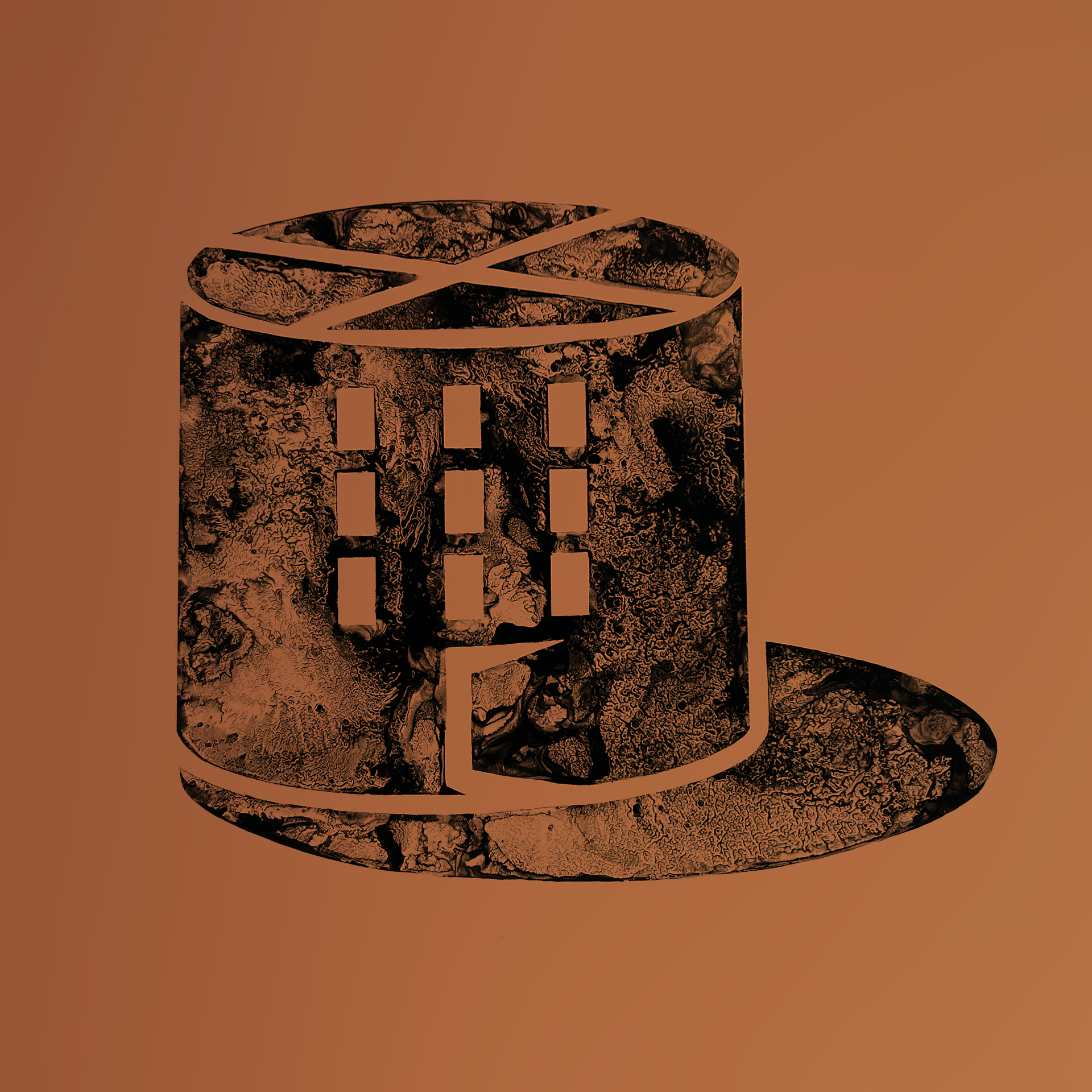
Manēre
polyptych
grisaille on glass
screen-printed flat colour
collaboration Geoffrey Grangé
création sonore In situ
Nathalie Lothier
41cm x 41cm x 4mm
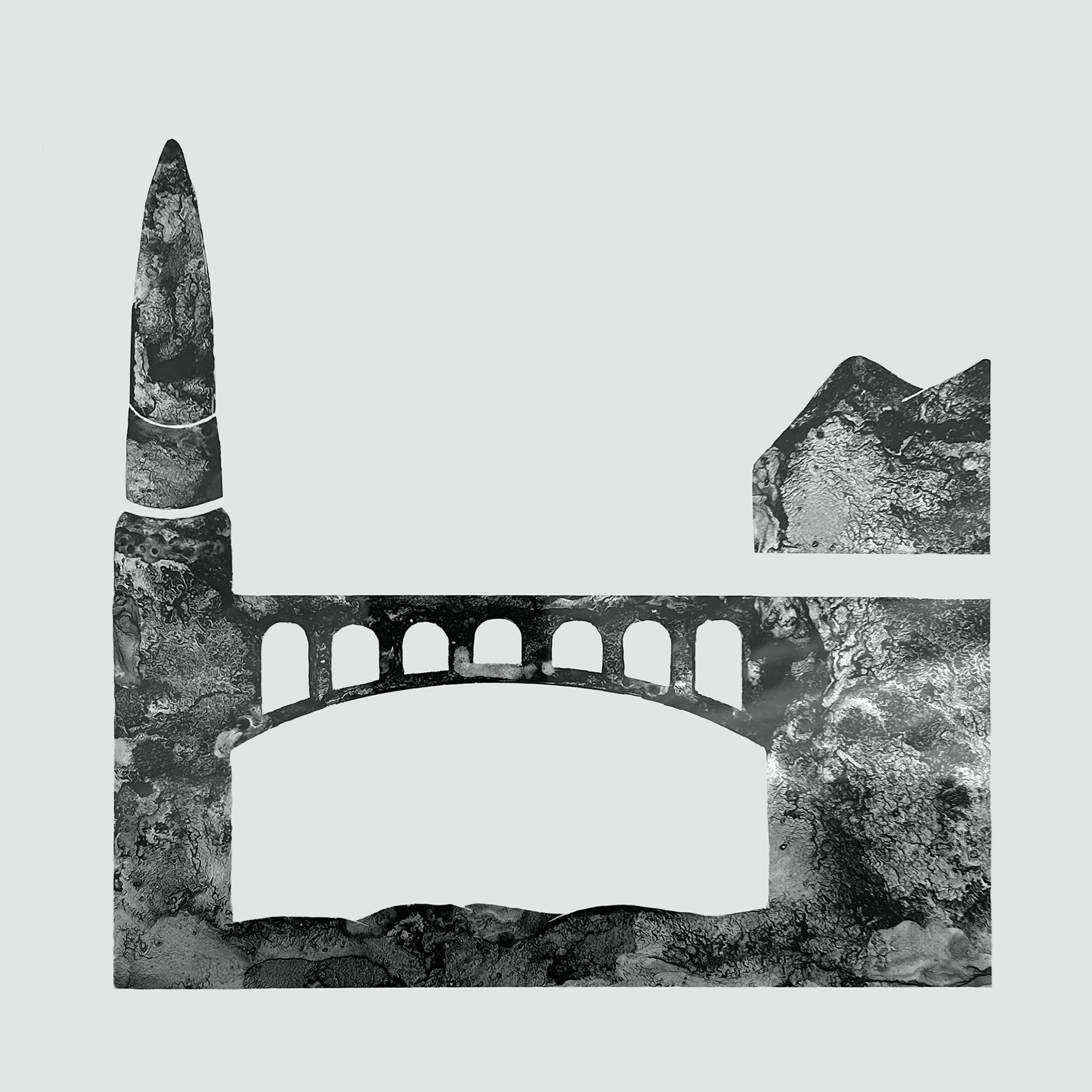
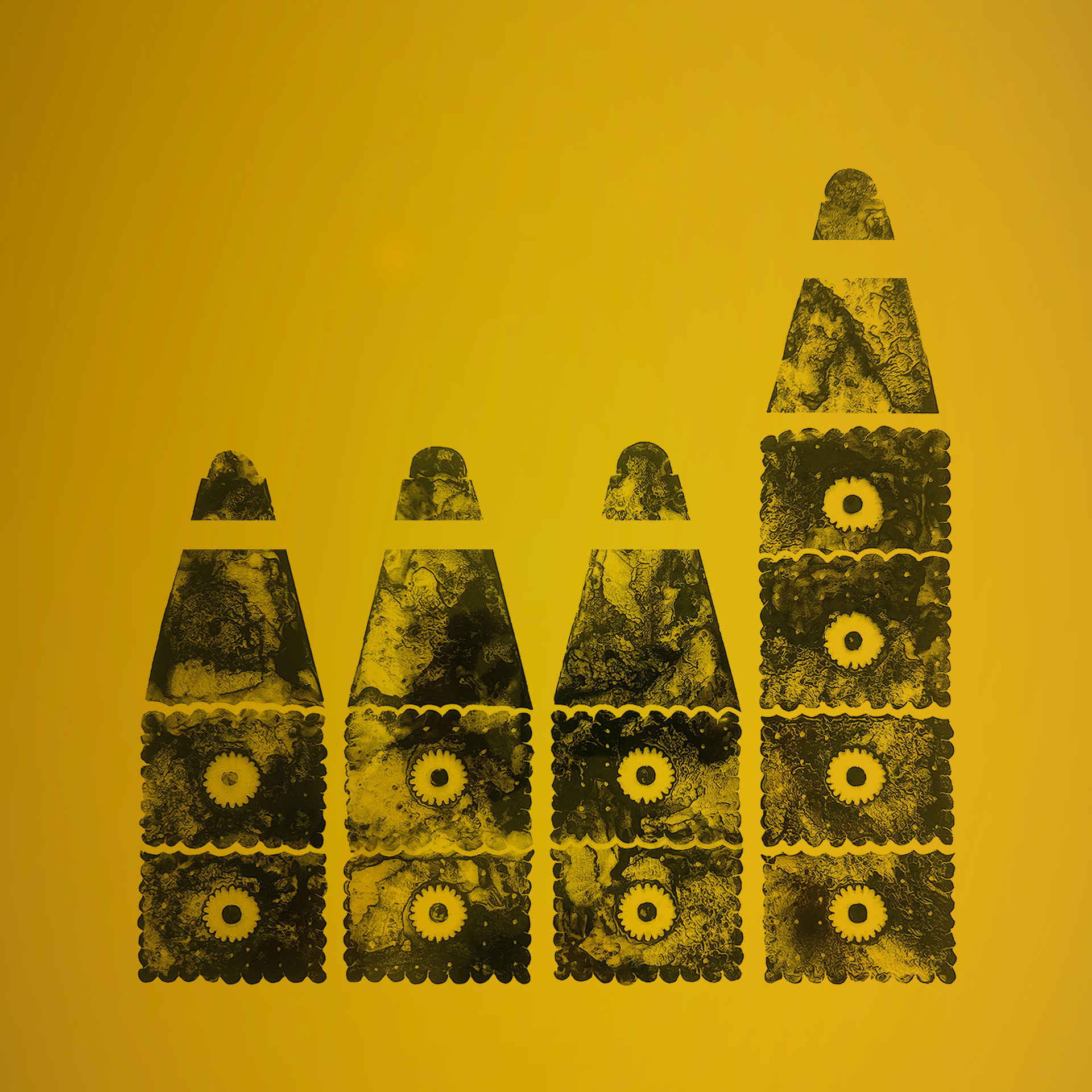
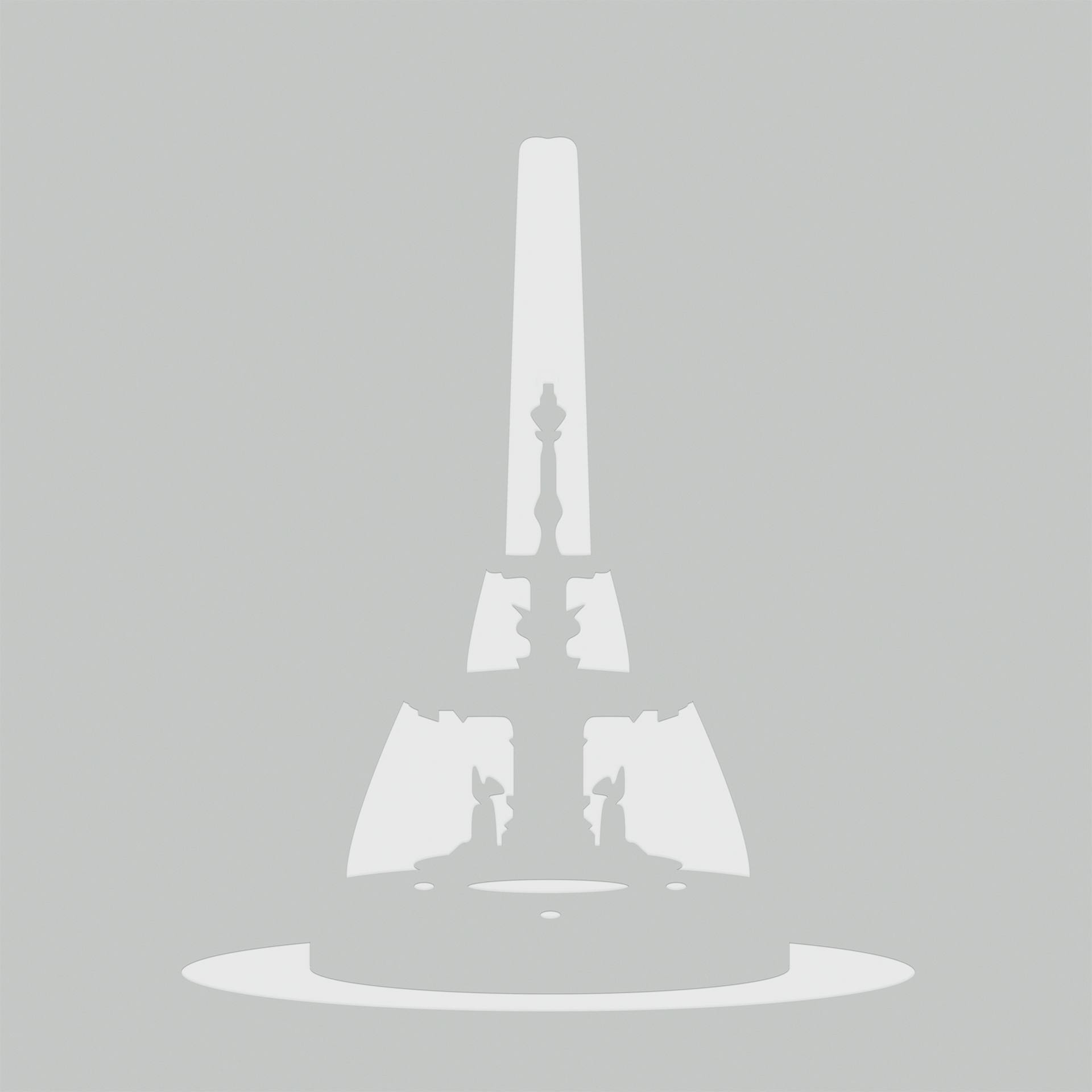
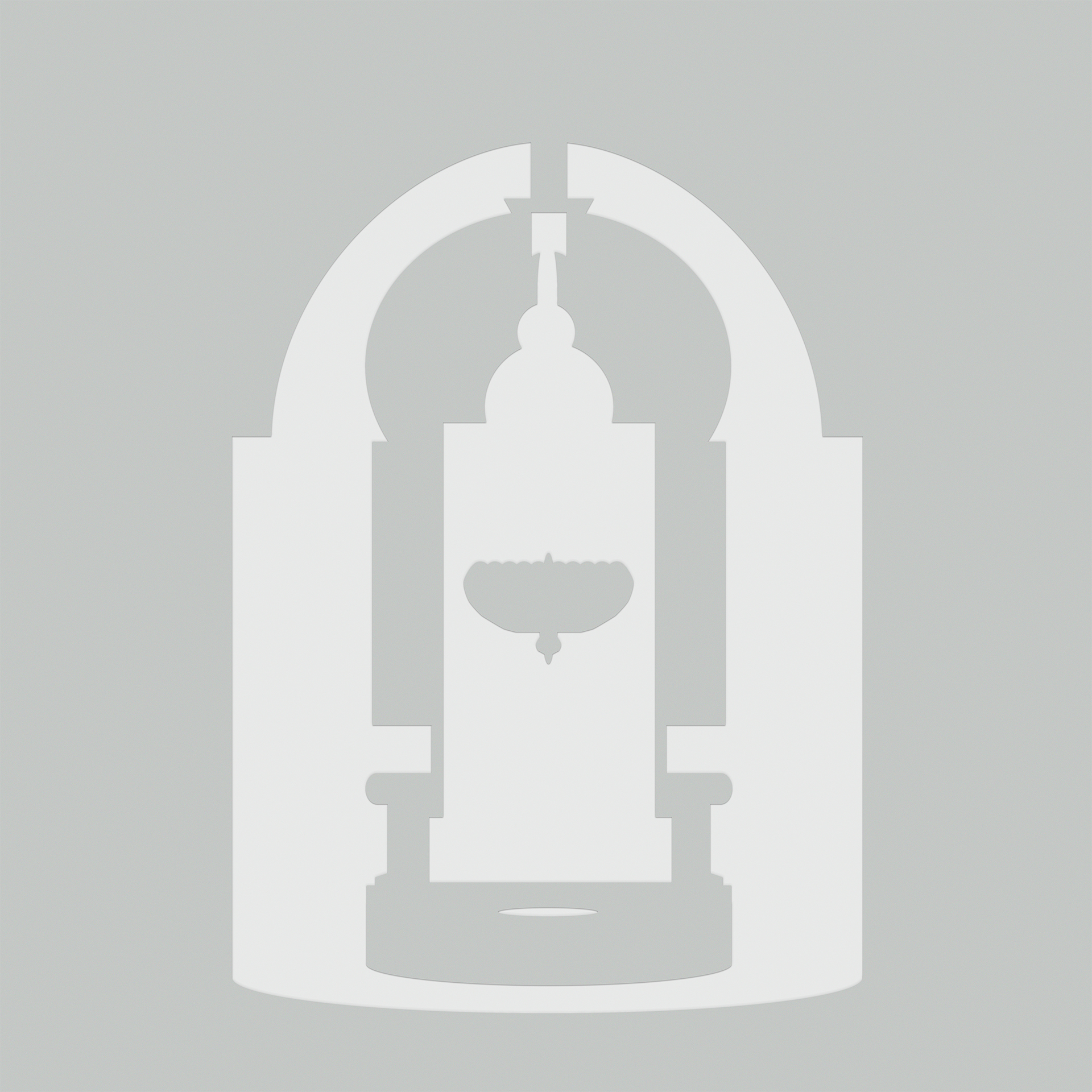
Manēre, from the Latin to remain, to stay, to endure, brings together five grisaille paintings on glass installed in the public space of Bellegarde-sur-Valserine. Conceived as a dispersed memorial monument, they bring forth, within the everyday uses of these places, fossilised visions of events from the Second World War documented by the Groupe Mémoire. These works form the final stone of the Entre les lignes project. Between a cinema, a community hall and a café terrace, they create a vibration between the current use of these places, the museum-like presentation of the framed works, and the curiosity of what these mineral drawings seem to be trying to tell us. Memory thus becomes inscribed within shared public spaces.

Mūtus
grisaille and engraving on glass
20cmx 25cm x 0,4cm
41cm x 41cm x 0,4cm
2025-2026
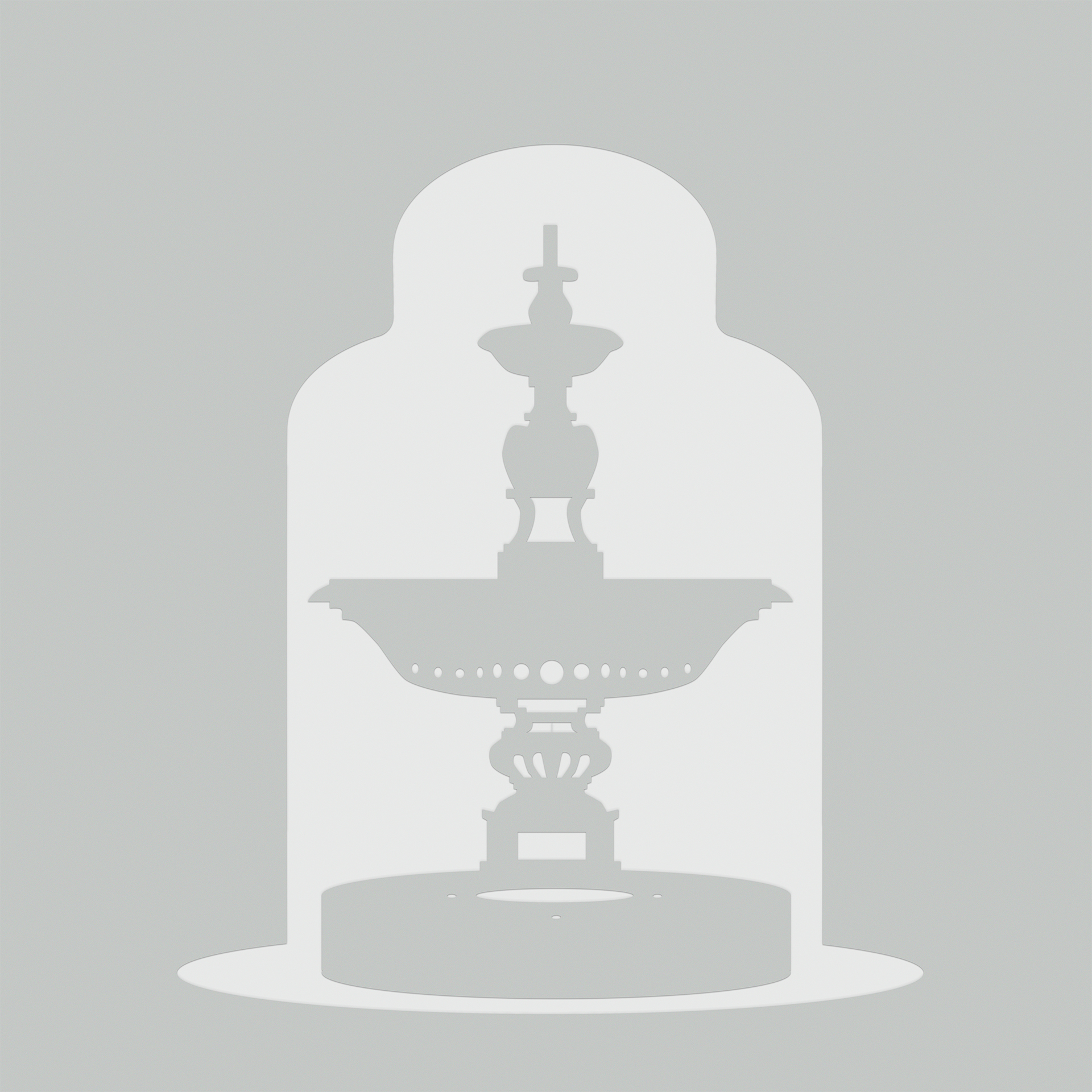
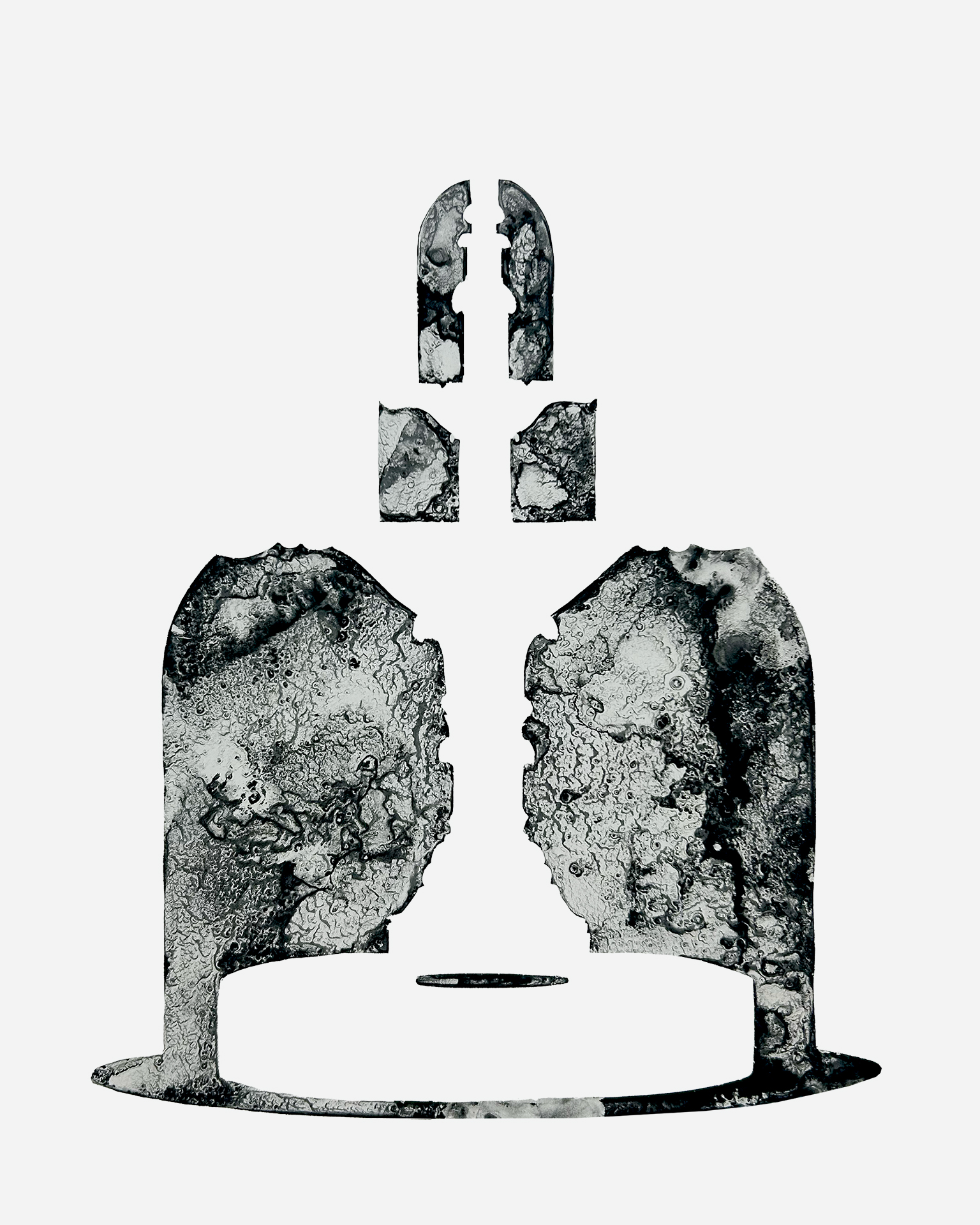
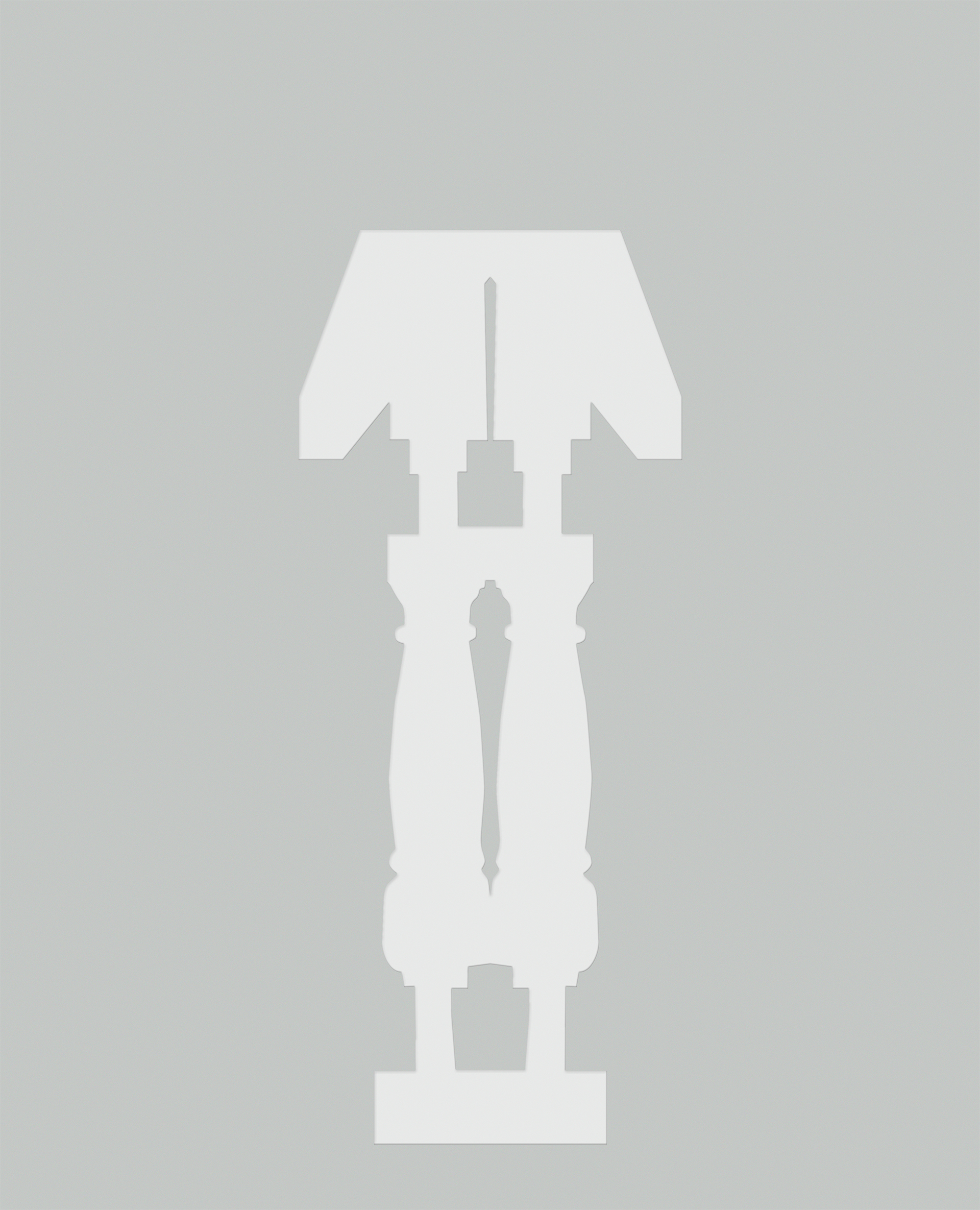
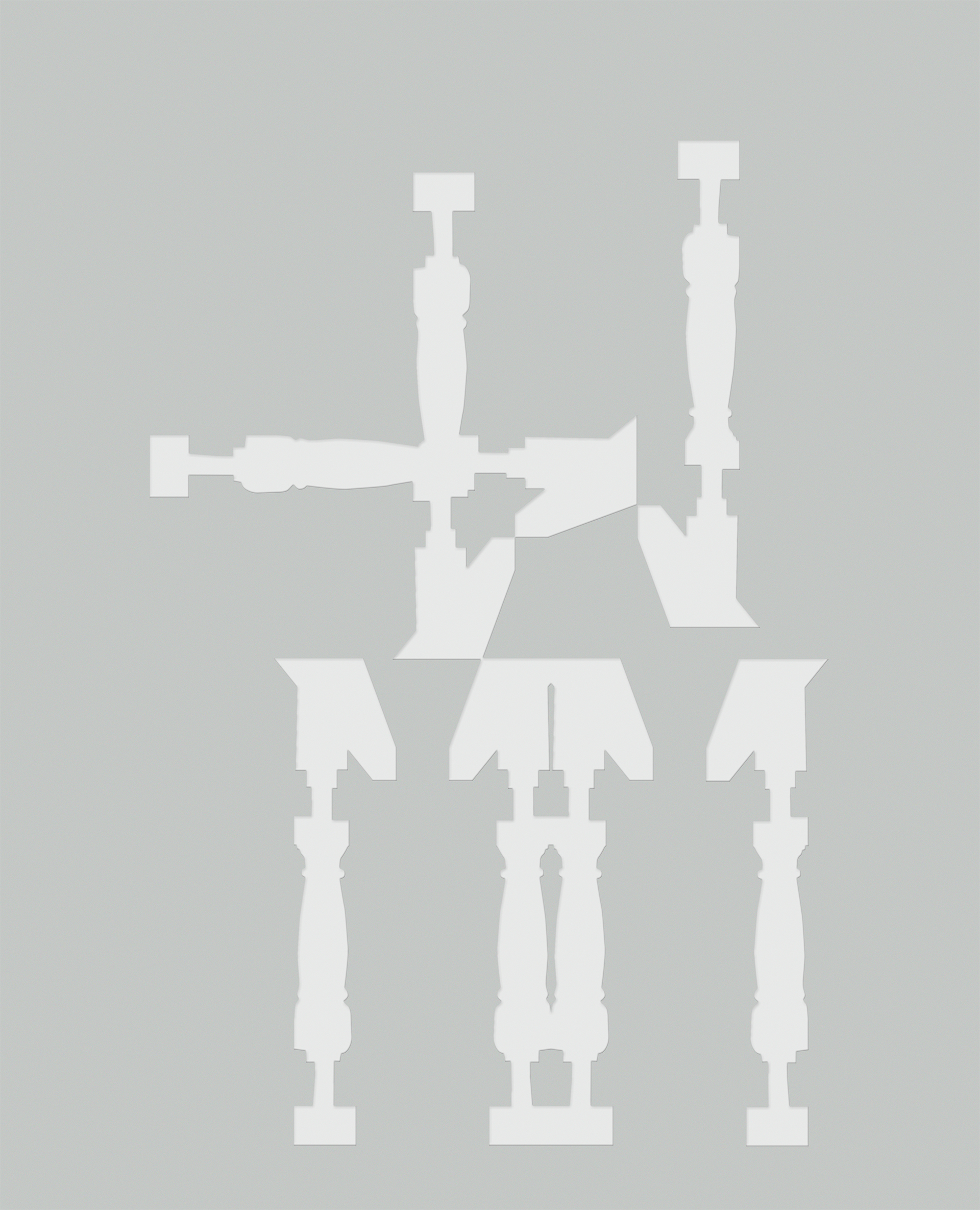
Mūtus vient du latin mūtus, « muet, silencieux, qui ne parle pas ». Ce début de série part d’une fontaine dont j’ai inversé l’eau et la pierre : le fluide devient masse, le mouvement se fige. Au sein des gravures, la pierre devient un bas-relief translucide et l’eau s’évide. Je m’intéresse à cette architecture de l’eau et aux formes que dessine sa circulation. Les fontaines citent différentes époques, marquées autant par le style de leurs sculptures que par le dessin, la disposition et le nombre de leurs sorties d’eau. L’usage des fontaines et des bassins reste profondément symbolique, qu’ils prennent place dans l’espace politique comme objets de représentation ou qu’ils aspirent à faire écho à ce qui, principalement, nous constitue.
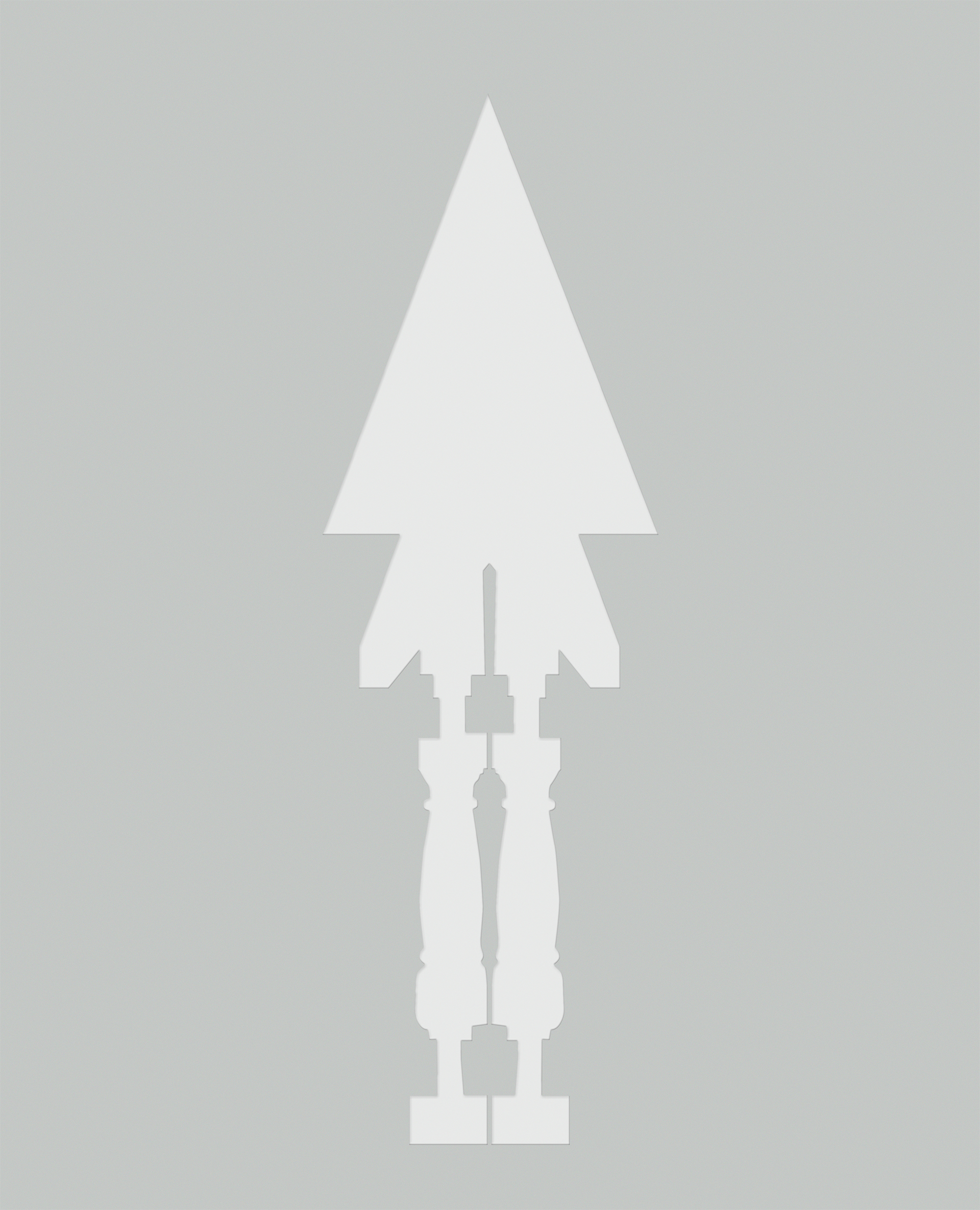
Motivus
engraving on glass
Variable dimensions
Motif comes from the Medieval Latin motivus, meaning “that which sets in motion,” itself derived from movere, “to move, to set in motion.” This piece originates from a remarkable wooden pillar discovered at Žďár Castle, on the border between Bohemia and Moravia, in the heart of the Czech highlands, during a precious encounter with Constantin and Marie Kinský. In this place, layered with history, which I invite you to discover, an architectural supporting element becomes a paving motif. Starting from what provides structure, from the foundations, to shift the form, repeat it, and return from it towards new directions.

Les voûtes
20cm x 25cm x 0,4m
metallic acrylic flat colour
grisaille on glass
The word voûte (vault) comes from the Old French volte, related to the Latin volvere, “to roll, to turn.” Its etymology thus carries the idea of curvature and reversal. In this piece, I work with the vault as a mirror: two structures echo one another, while solid and empty spaces are inverted. The techniques used to construct vaults over the centuries also reveal something of the spirit of their time, of how each period conceived and gave shape to space. These successive architectures interest me both for what they reveal about their time and for what they evoke about our own construction: we, too, build ourselves through successive contradictions.
Az-zahr
grisaille on glass
20cm x 25cm x 0,4cm
2026
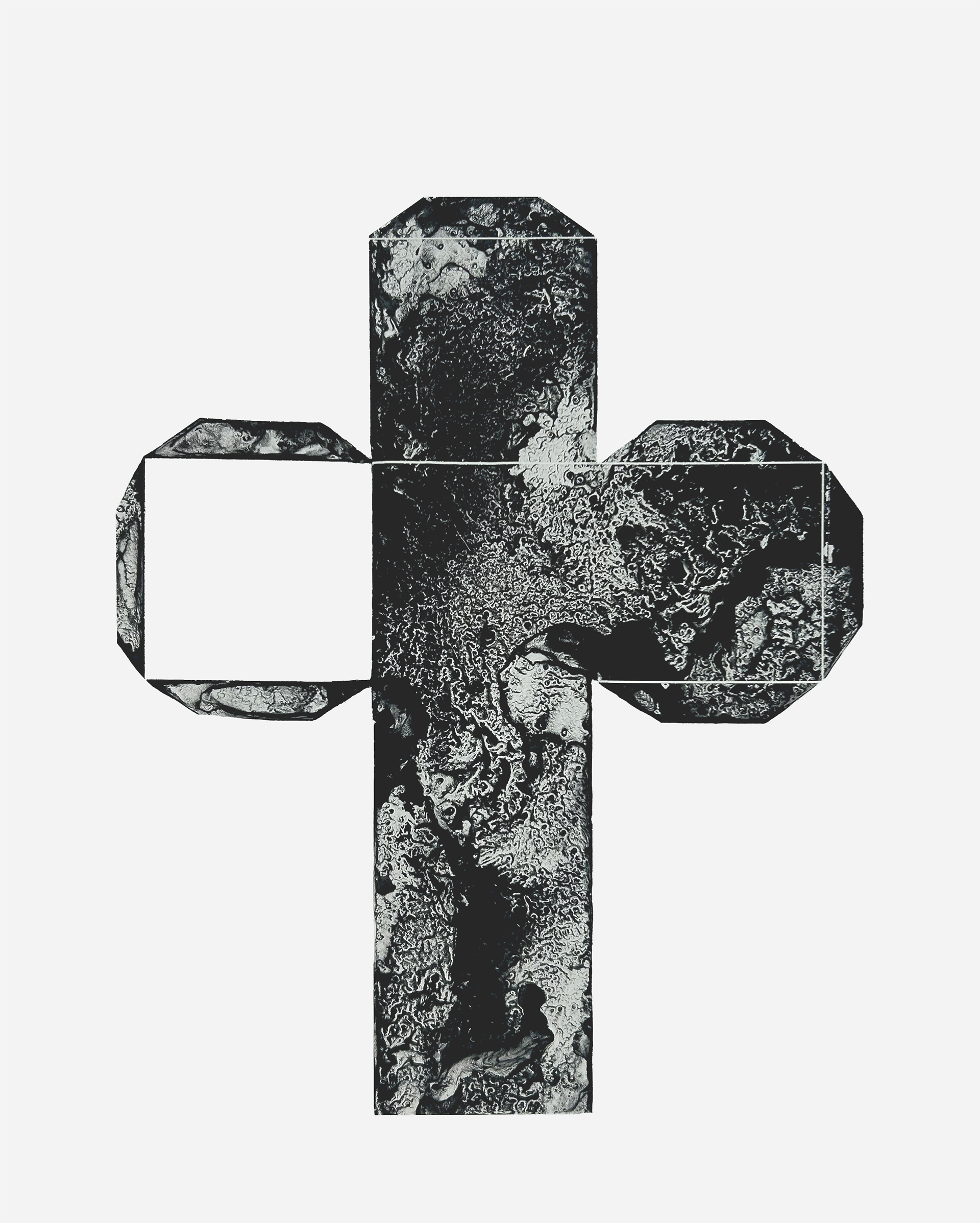
Az-zahr comes from the Arabic zahr, meaning “flower.” The term is thought to have referred to a game of dice in which the winning face bore a flower, before giving rise to the French word hasard, meaning “chance.” The painting takes up the unfolded net of a die, with one face hollowed out: chance sometimes brings forth, unpredictably, an opening, a direction beyond our control. Unfolded, the form may also evoke the paving of a church nave, a hopscotch grid, or an elementary construction. In memory of Judith
Mola
grisaille on glass
50cm x 35cm x 0,4cm
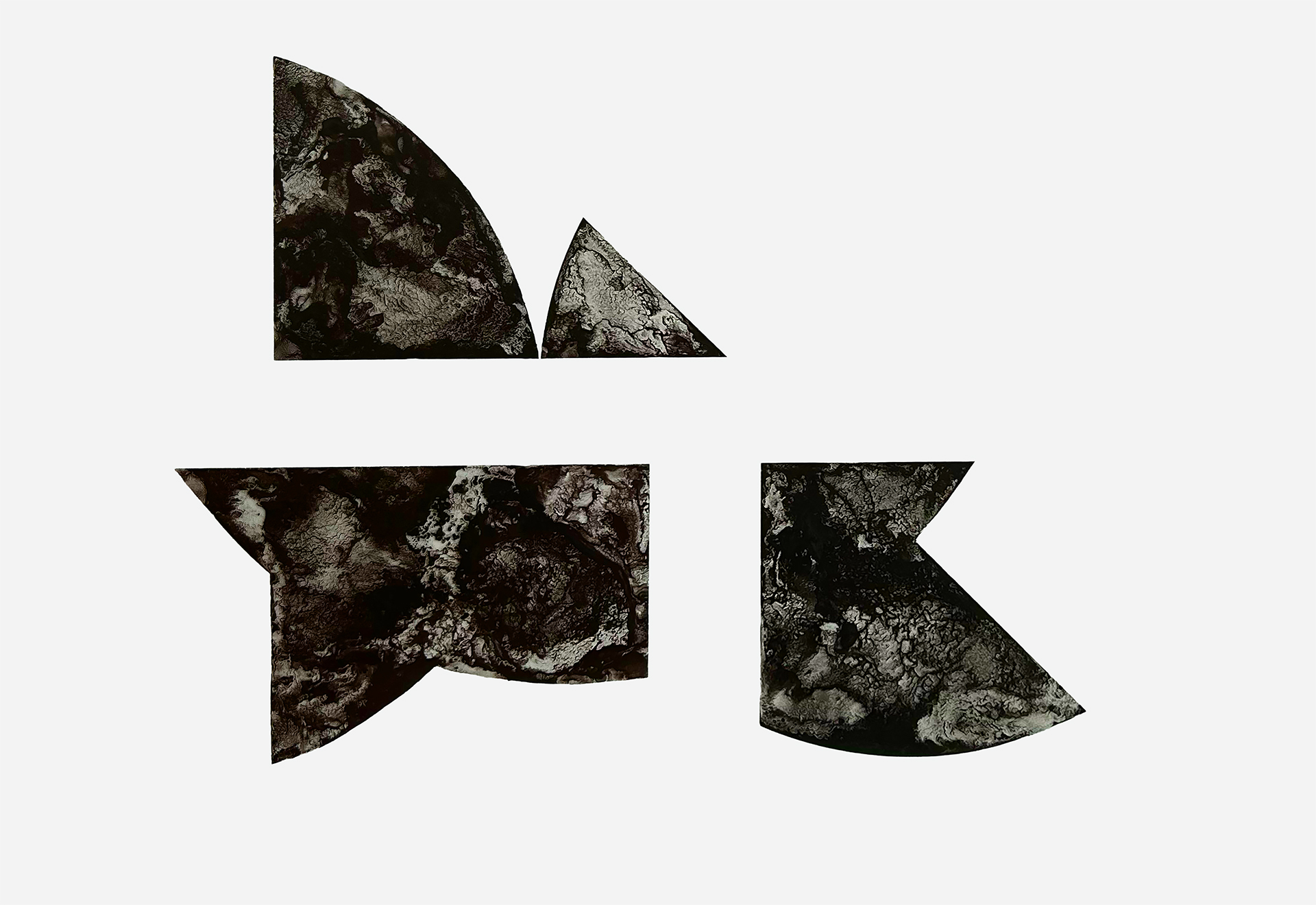
The verb meuler comes from meule, derived from the Latin mola, “millstone,” a stone used to grind grain. The word belongs to an ancient family associated with the ideas of grinding, crushing and reducing through friction. In this piece, I superimpose the same form and rotate it upon itself, like a thought considered in one direction and then another. I seek to rub, grind down the content, and open up a passage. The gesture remains elementary and repetitive, close to the patterns we spontaneously draw when bored, searching for something, or when an idea keeps returning without ever quite resolving itself.
2025
Blãsjan
grisaille on glass
triptych
50cm x 60cmx 0,4cm
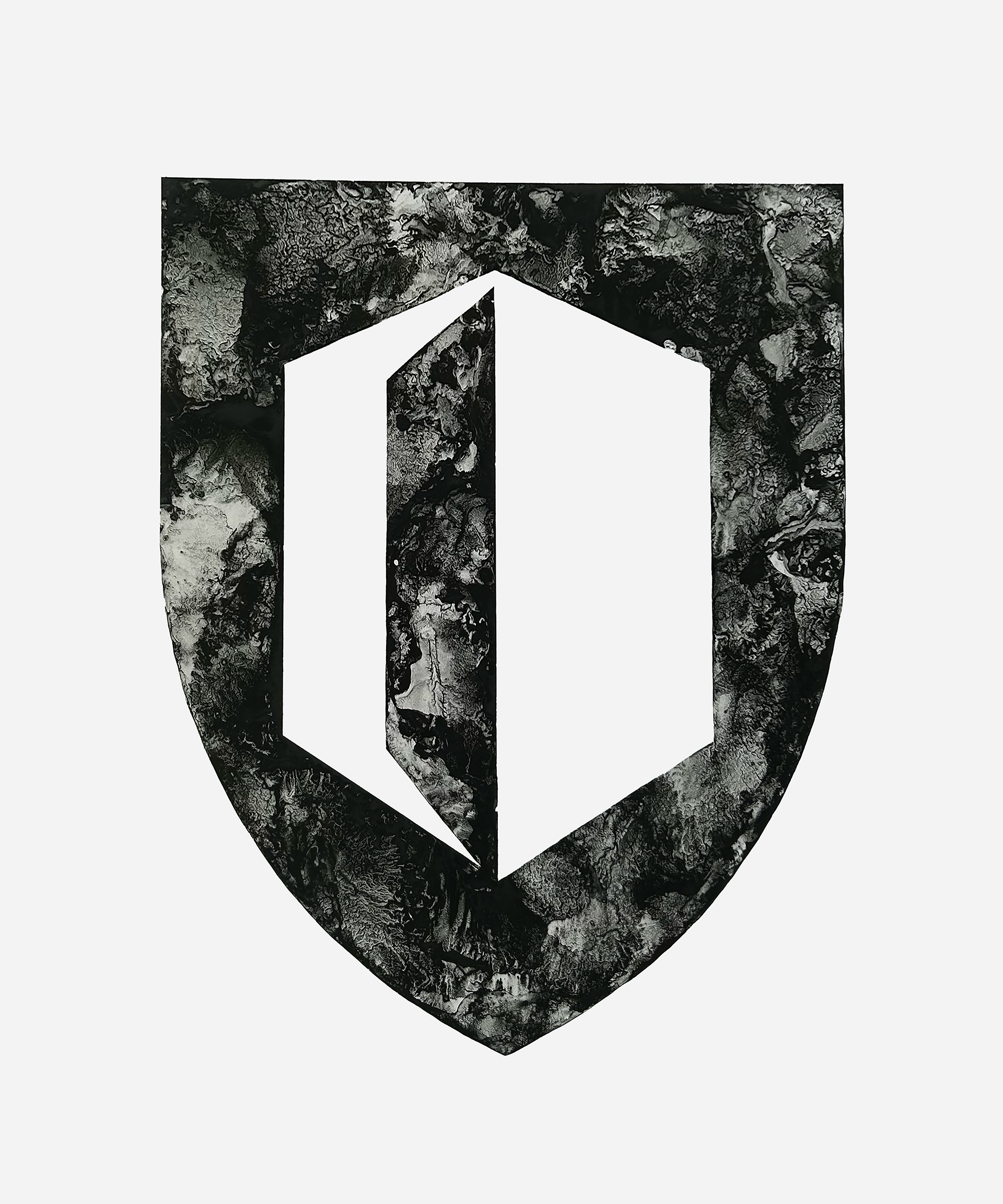
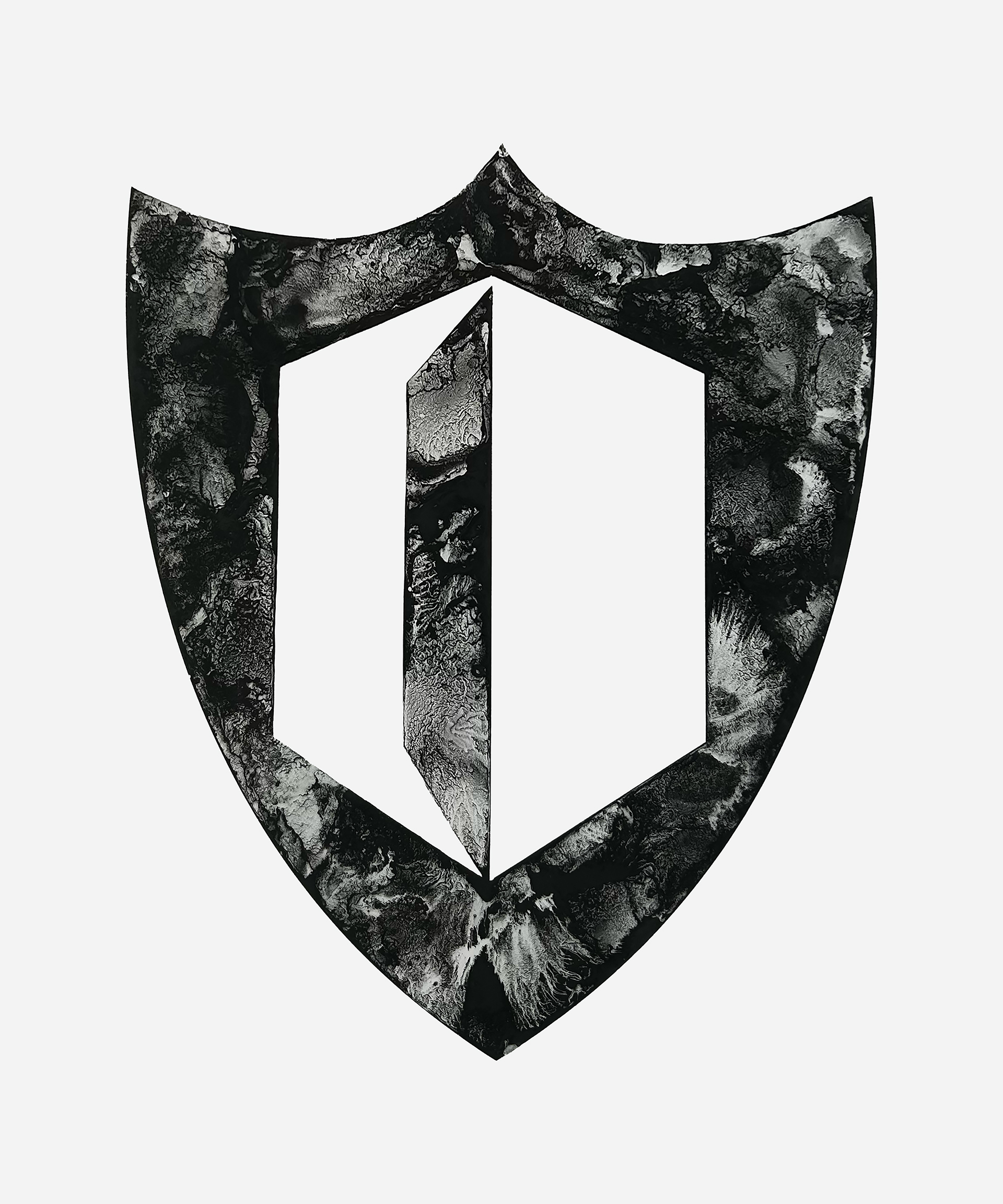
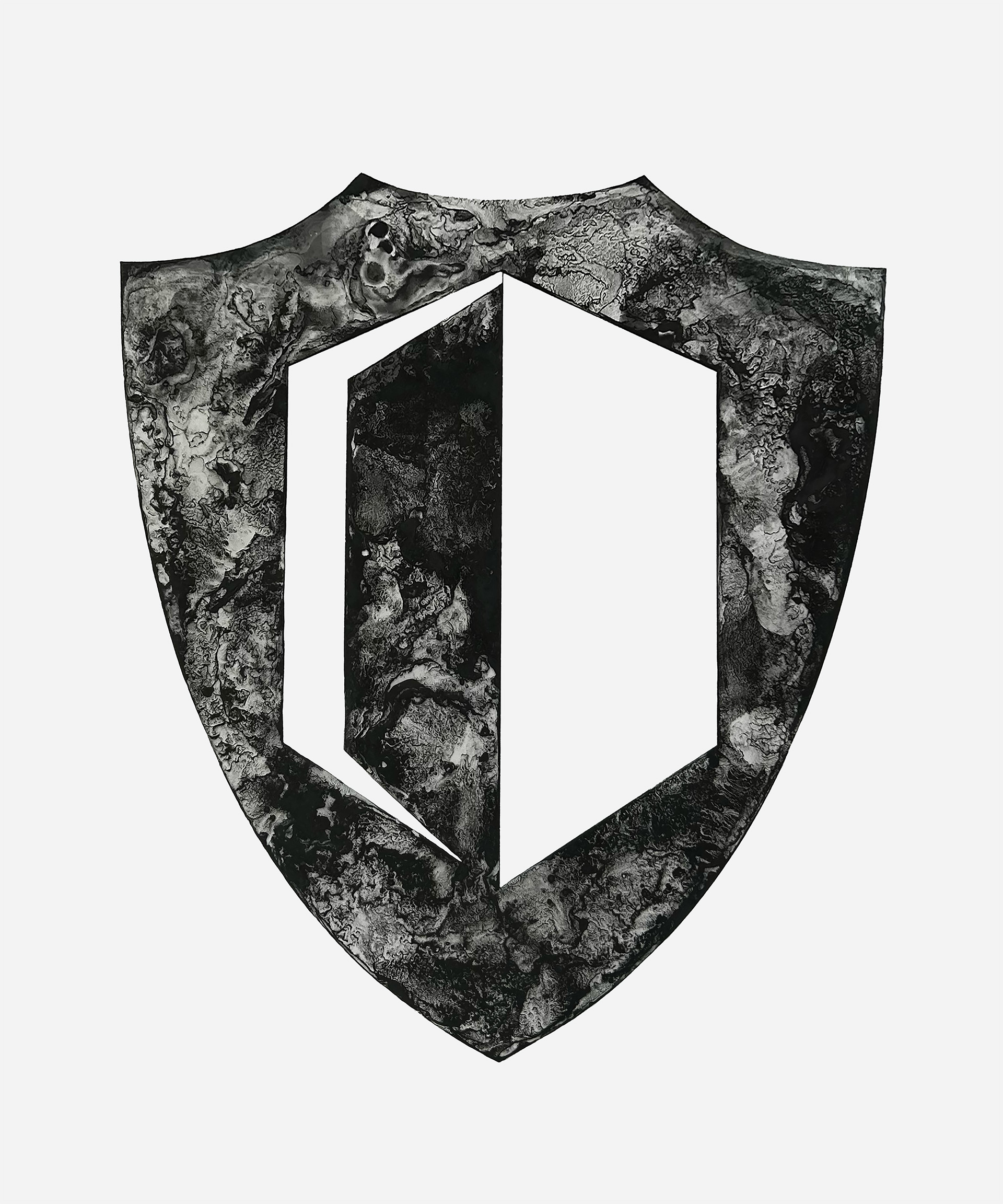
Blason has notably been linked to the Frankish blãsjan, associated with the idea of brilliance, and with “engraving a shield by fire.” With Blãsjan, I draw on shields, coats of arms and distinctive emblems from different cultures, from medieval Europe to Japan, combining them with forms drawn from popular culture: superhero shields, badges and sheriff’s stars. At the centre, a door opens into different positions. In this way, I explore what lies behind armour, signs and appearances: what individuals and societies choose to reveal, between protection, representation and displays of strength.

Kôma
grisaille on glass
gold metallic acrylic flat colour
Variable dimensions
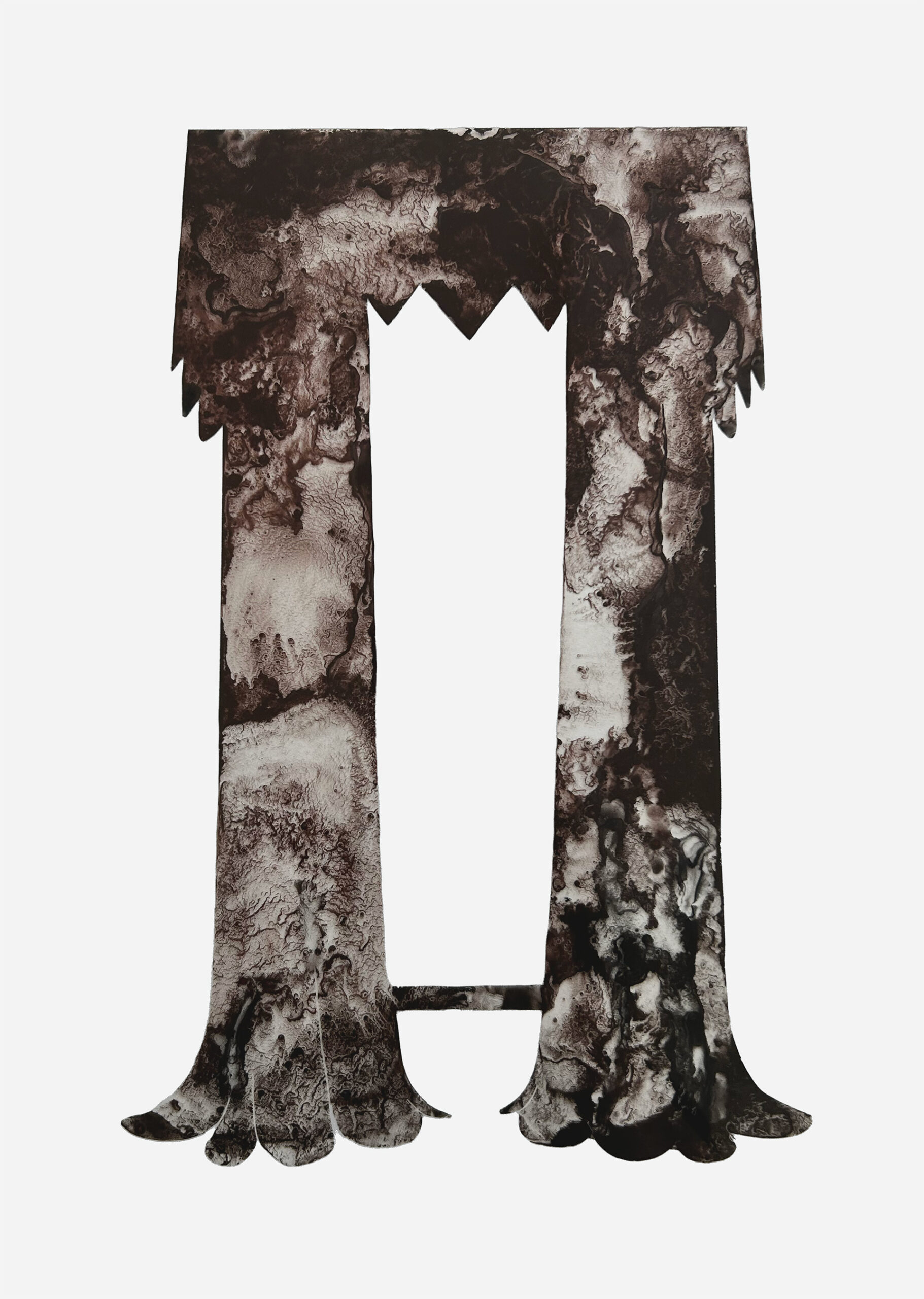
Kôma comes from the Ancient Greek κῶμα, meaning “deep sleep” or “lethargic state”, from which the word coma derives. With this piece, I begin a series centred on curtains and the dimensions of our windows, drawing on the tradition of drapery in painting. The size of a window reveals much about the period of a building, its architecture, but also the wealth and status of those who inhabit it. Here, I freeze the curtains in motion, stripping them of their suppleness: turned to stone, they evoke ornaments, tombs and triumphal arches. With Kôma, I bring together several scales: that of the monument, the more intimate scale of interior space, and even that of living matter as it disappears.
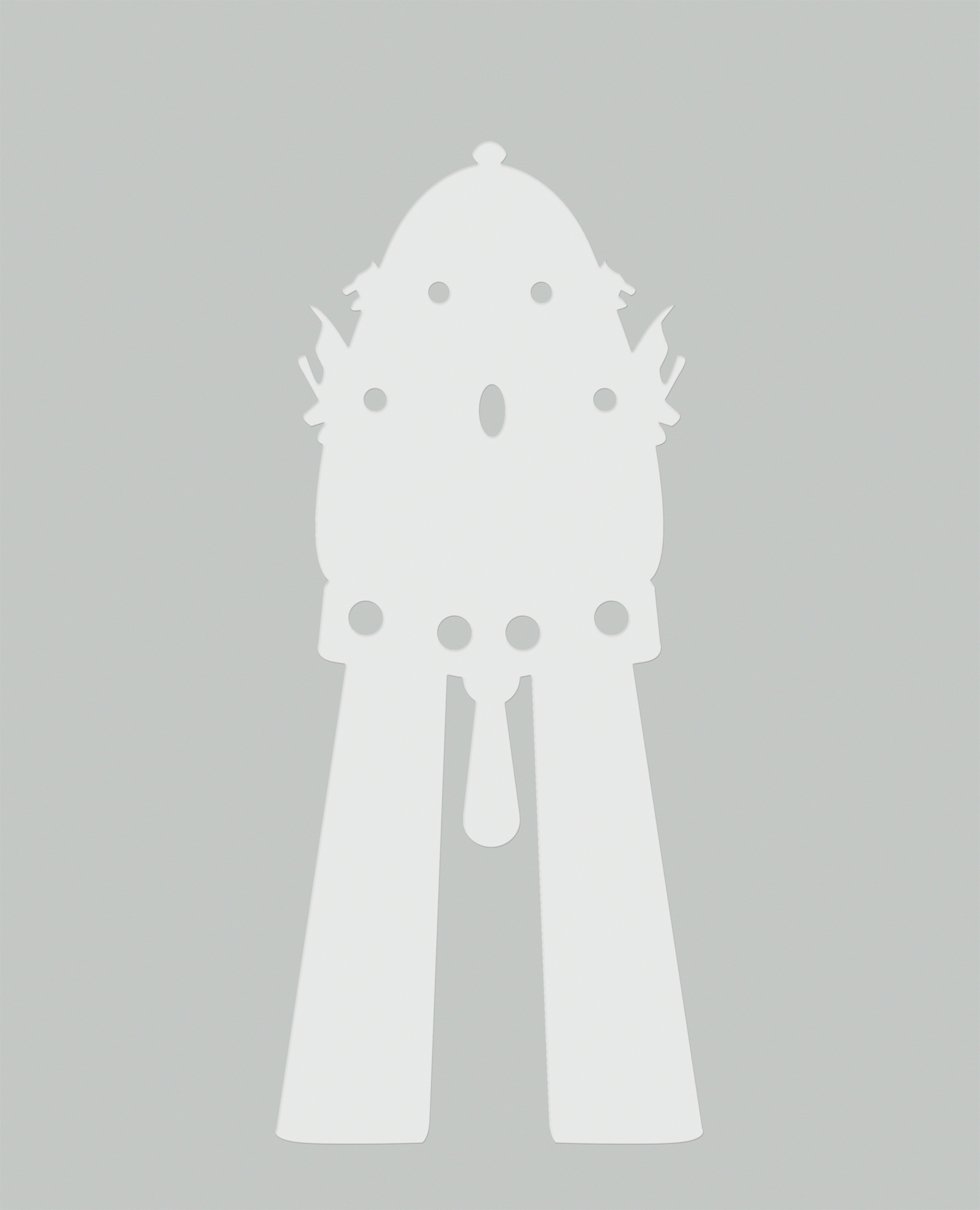
Eikṓn
engraving on glass
10cm x 15cm x 0,4cm
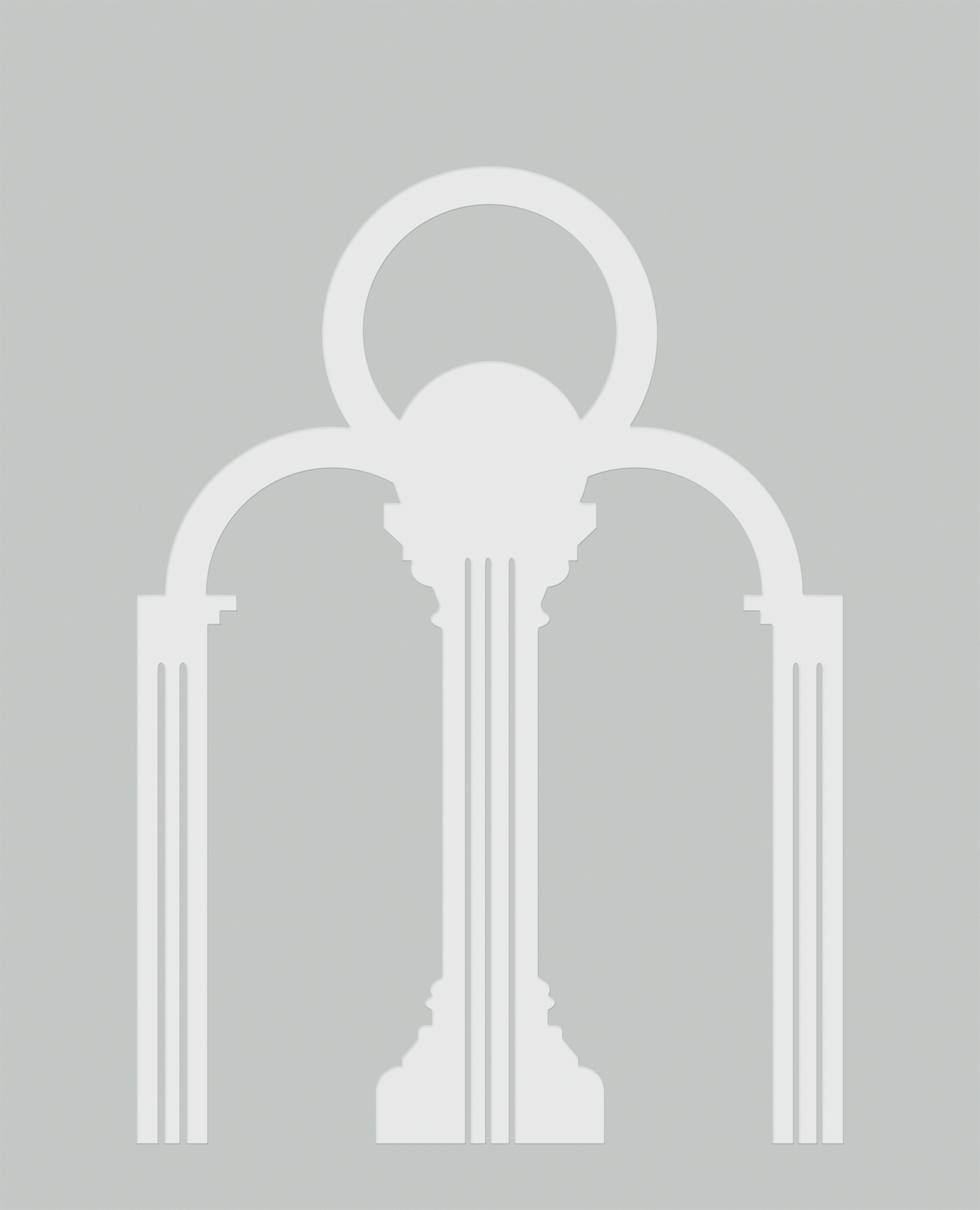
Eikṓn, from the Ancient Greek εἰκών, means “image, representation, portrait, resemblance.” Before the icon became primarily associated with the sacred, the word referred more broadly to that which represents and gives presence through an image. This series of small 10 × 15 cm engravings returns to this original meaning. I bring together and magnify forms that retain a symbolic dimension without belonging to a single narrative. Signs intersect: a bell meets a mitre, columns stand alongside forms of psychic representation. Through their juxtaposition, these figures compose small, autonomous images, as a way of honouring form, its symbolic power and its beauty.

Fissiles
grisaille on glass
20cm x 30cm x 0,4cm
The word fissile comes from the Latin fissilis, “that which can be split,” itself derived from findere, “to split.” It describes something that can be split, divided, or separated, generally along certain directions or planes. What interests me in this word is that it does not yet describe the fissure itself, but rather the possibility of a fissure contained within the material. Here, I begin with a solid ground. This piece is the beginning of a series in which I want to work with masses in different ways, like breaths pushing the angles in different directions, under a weight, an underlying tension.
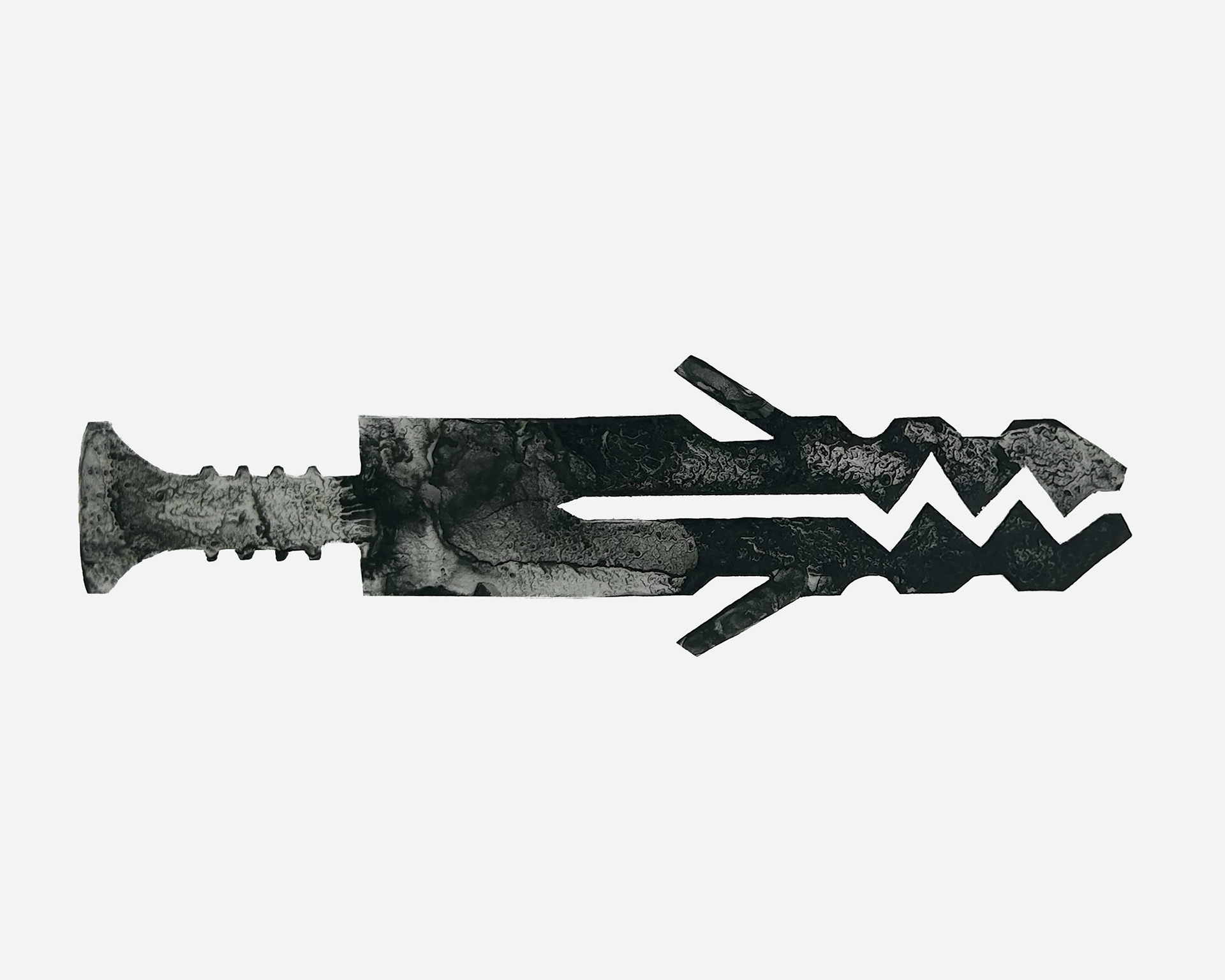
Clavicula
grisaille on glass
24,5cm x 19cm x 0,4cm
The form of this piece comes from a peg, a small element used to hold other parts together. The word comes from the Latin clavicula, “little key”, and carries the idea of assembly, fastening and connection. As I drew it, its shape also reminded me of a submarine: an enclosed, submerged space in which several bodies find themselves together. The submarine thus echoes situations in which, to get through a particular moment, we come together as one, we hold together. I like this shift between the tiny object that joins things and the space that contains them, and what it says about the way we hold together, sometimes simply for a while.

Palintrope
grisaille on glass
copper metallic acrylic flat colour
20cm x 25cm x 0,4cm
Palintrope comes from the Greek palíntropos, “turning back, turning around,” from palin, “again,” and tropos, “turn, direction, manner.” I made this piece following the Culture and Democracy conference in November 2025. The form conveys something of this movement: a passage that unfolds like a labyrinth, turning and shifting. Pierced through, it never appears in its entirety. Some parts seem held back, suspended between emptiness and fullness. The path almost returns to its starting point, without ever quite reaching it: in the meantime, something has changed.
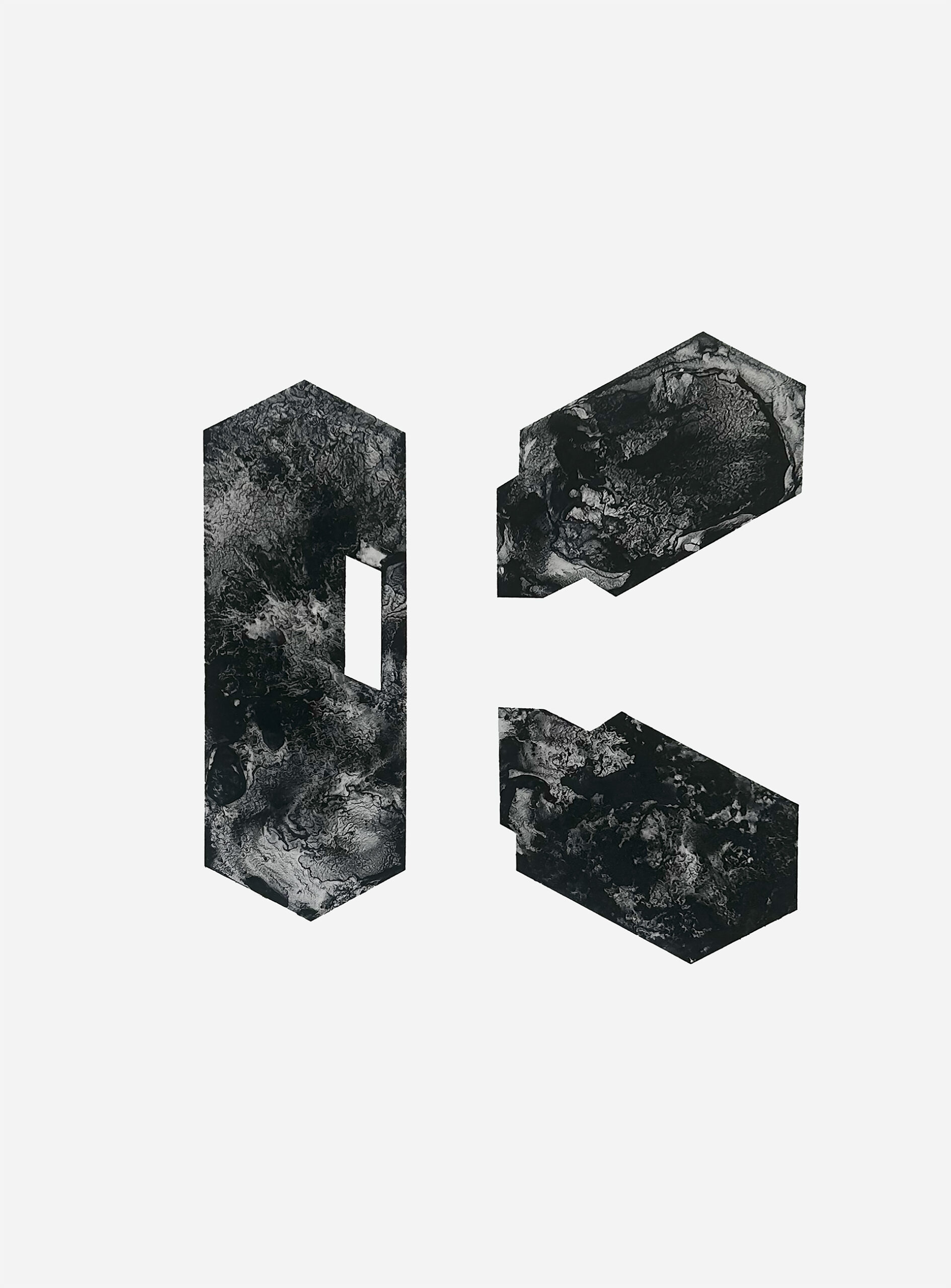
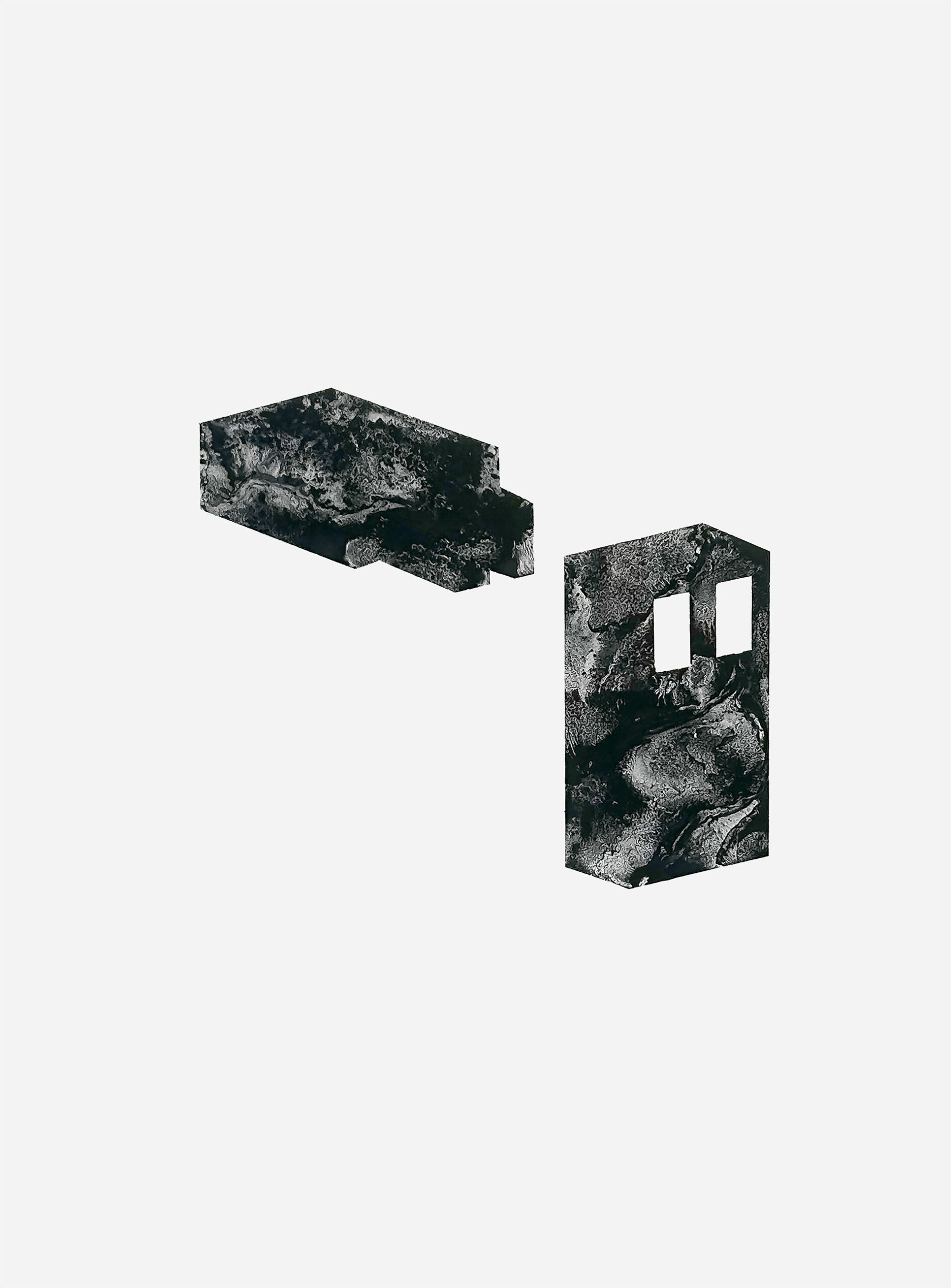
Instables assemblés
polyptych
grisaille and engraving on glass
48cm x 65 cm x 0,4cm
2018-2025
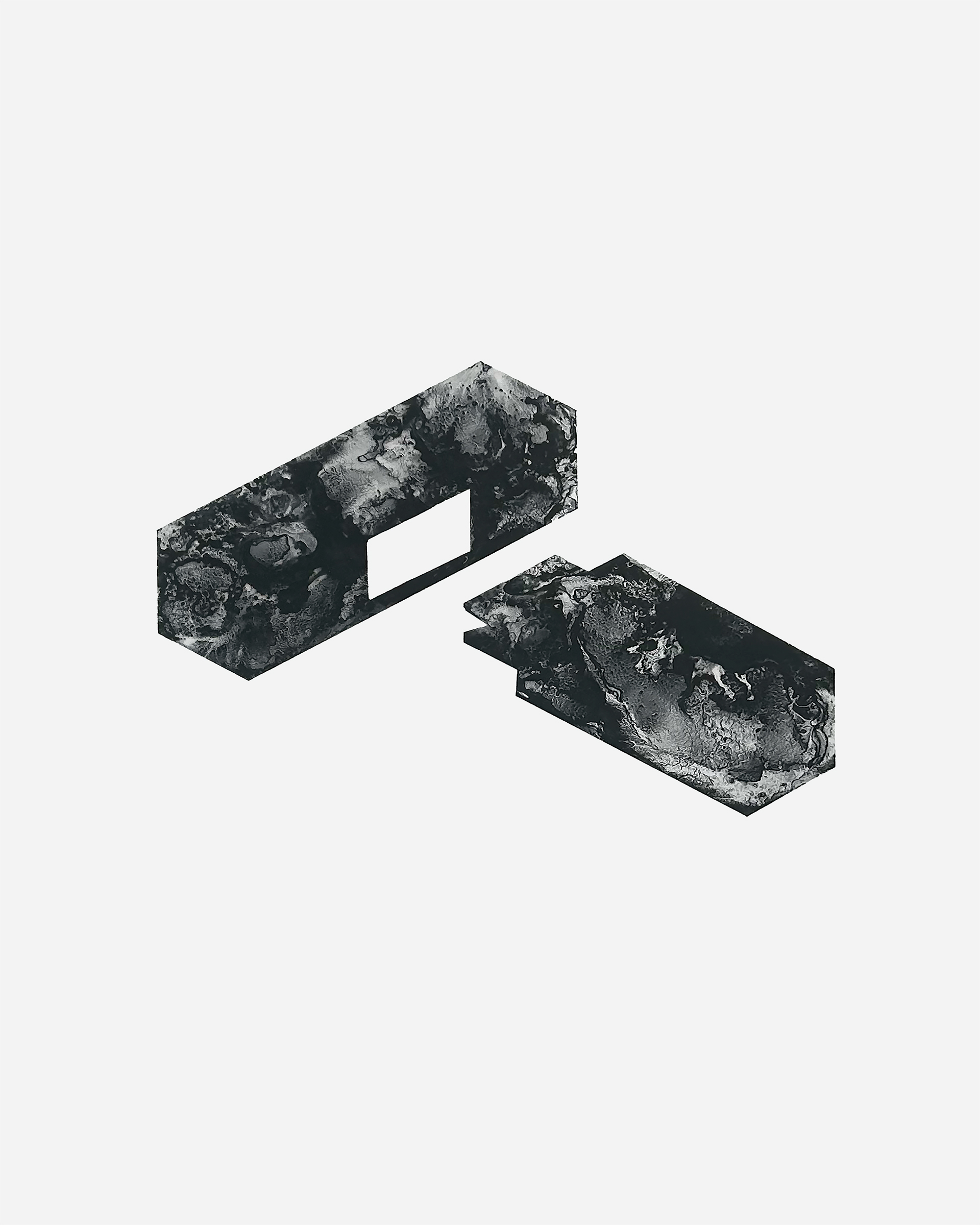
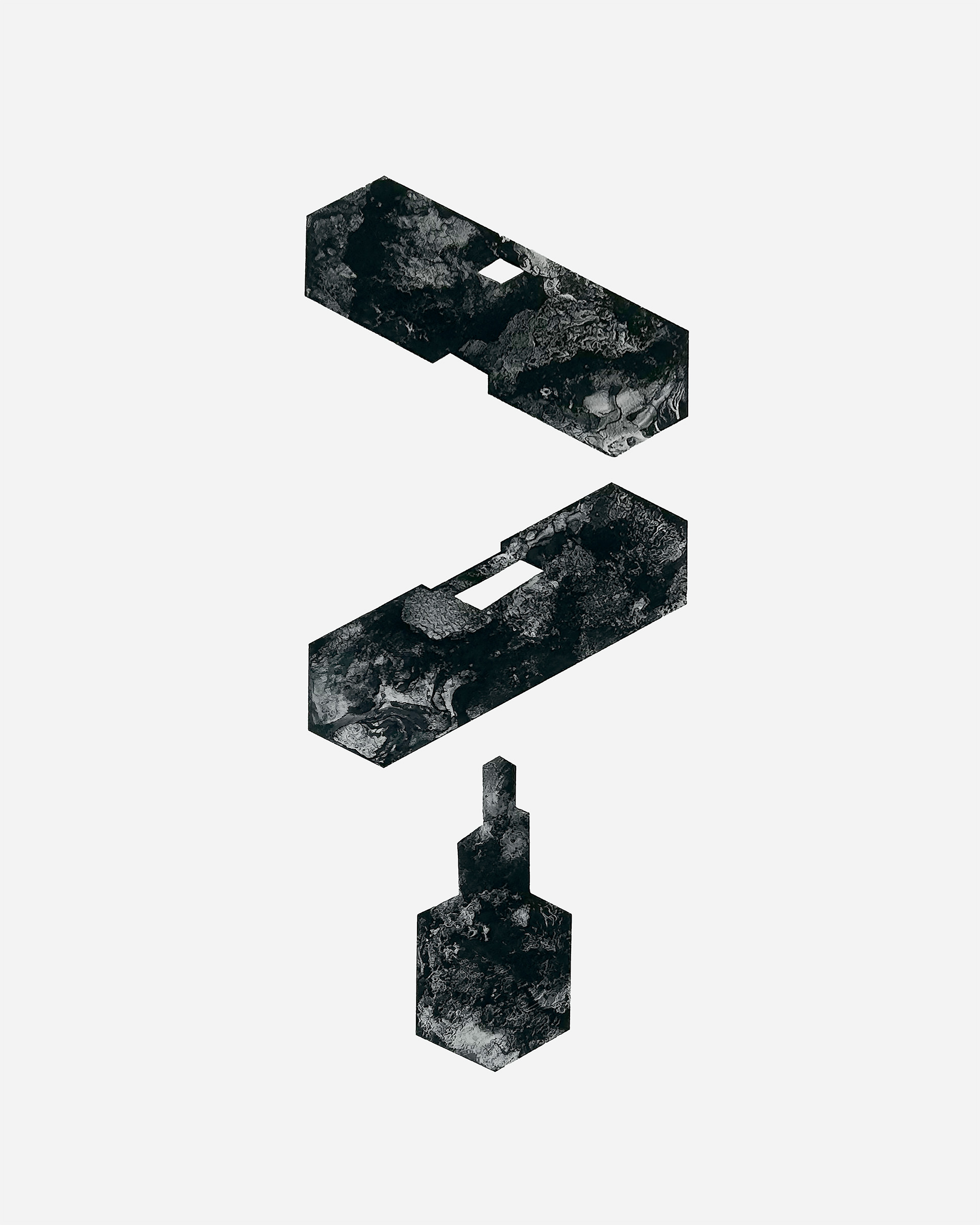
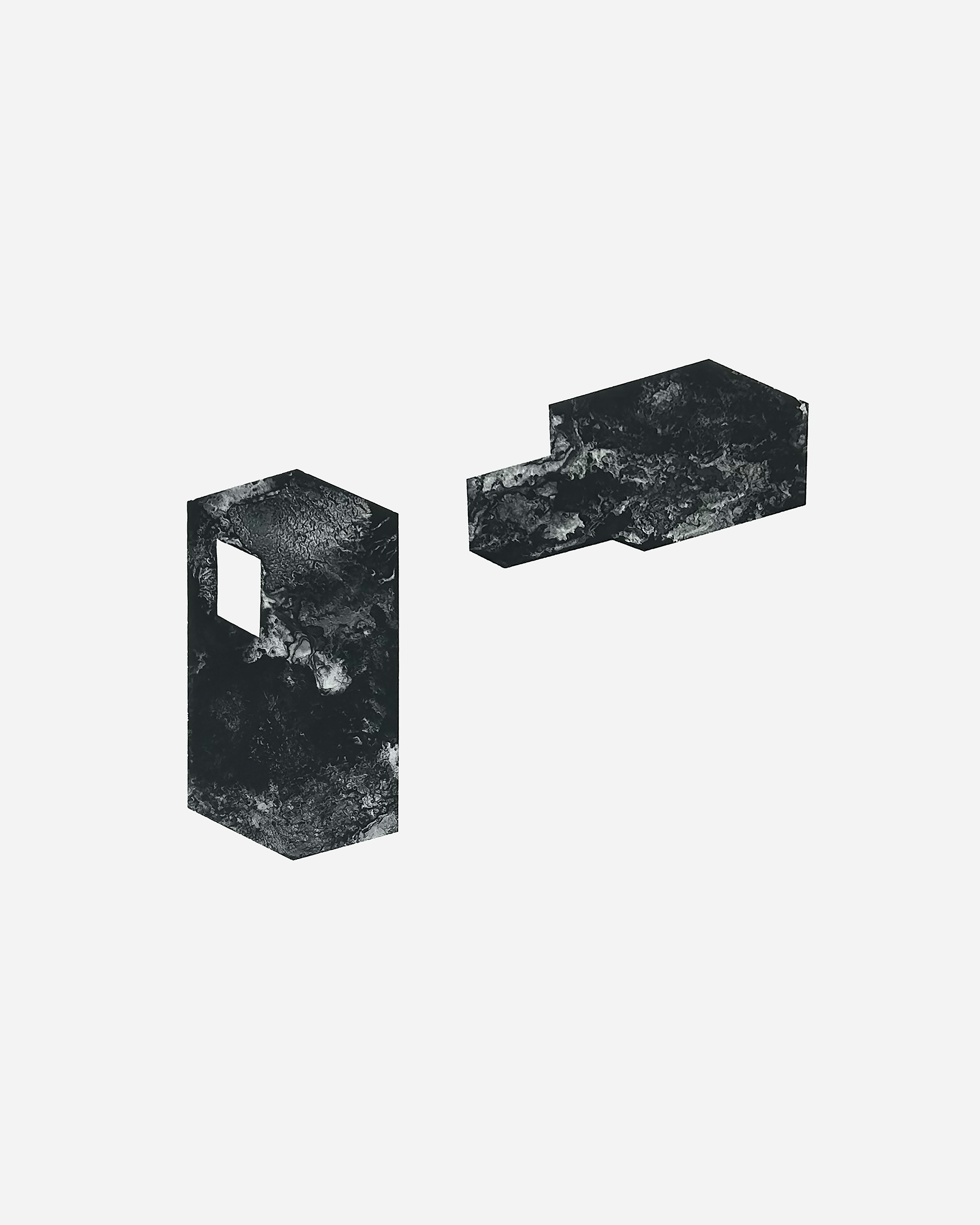
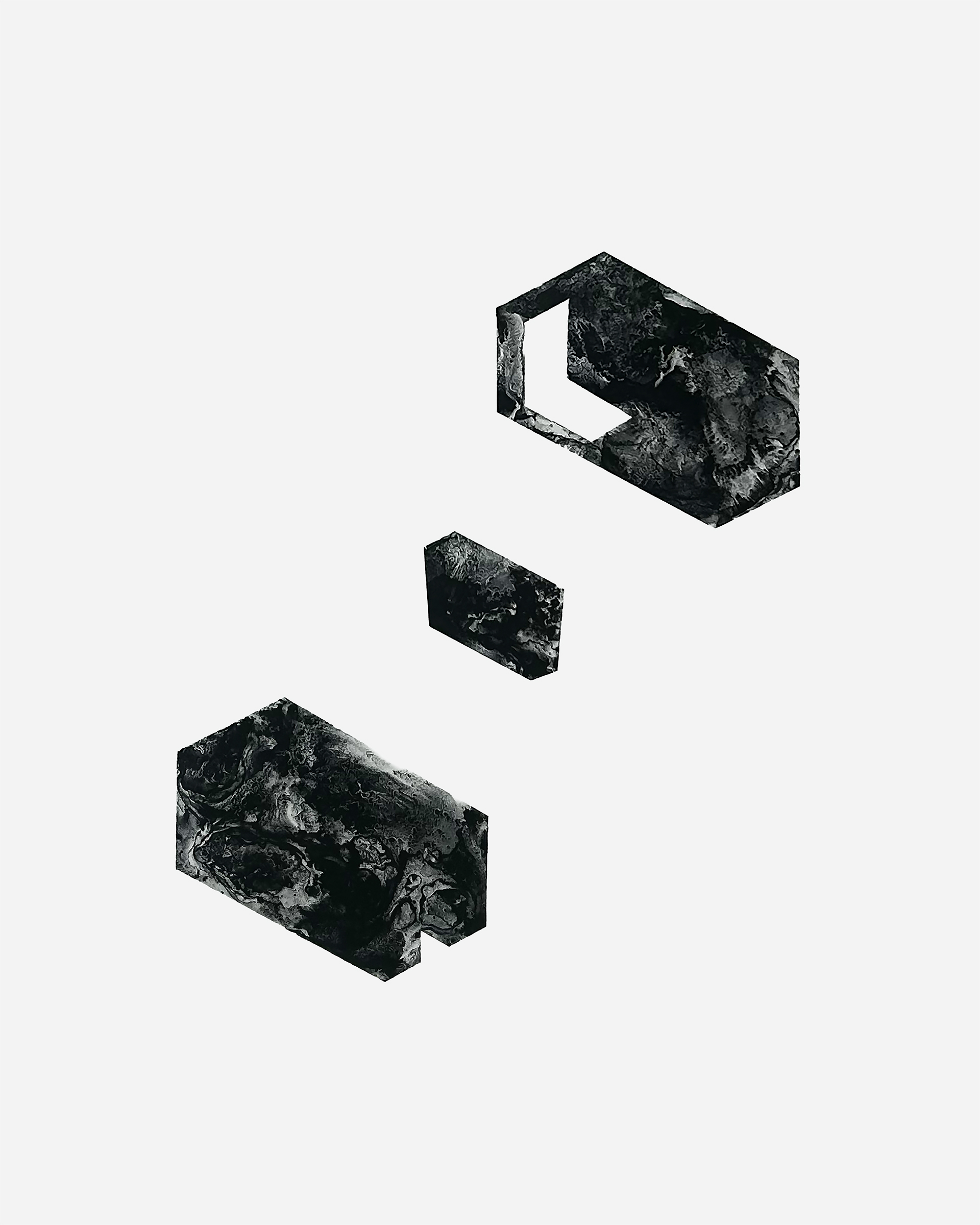
Instables assemblées draws on ancestral principles of joinery found in woodworking traditions around the world, such as tenons, mortises and notches. The forms invite joining, inserting, fitting together; the impulse is almost physical. Yet the positioning of the openings prevents them from interlocking. I work with this contradiction between the obviousness of the gesture and its impossibility as a way of considering our own psychological construction: attempting to hold together what constitutes us, finding points of support and balance despite imperfect adjustments. Construction then becomes an ongoing process of searching.

Déhiscence
engraving on glass
40cm × 60cm × 0,4cm
Dehiscence comes from the Latin dehiscere, “to split open, to gape.” The term refers to the spontaneous opening of an organ along a specific line, like a fruit splitting open to release its seeds. In this piece, I split a form derived from a boat hull in two and unfold it as a mirror image. An opening appears at its centre, resembling a hatch and giving access to a possible interior. This gesture evokes, for me, the way we try to open things up and probe what they contain, just as we seek to understand the thoughts of others. Yet something always remains inaccessible. We also open ourselves up and conceal ourselves, choosing what we allow others to see.
2024


Insongeables silices
polyptych
5 engravings on glass
40,5cm x 50cm x 0,4cm
Il y a deux impossibilités récurrentes dans les rêves : celle d’écrire et de lire, et celle de voir les fenêtres. On distingue des espaces, des bâtiments, mais les zones de jonction, de seuil, restent floues ; les transitions n’apparaissent pas. Ici, ces deux impossibles se rencontrent pour créer une forme. Les constructions bâtimentaires et les plumes font référence à des époques différentes ; l’aspect vaporeux de la gravure peut évoquer la façon dont ces lieux rêvés peuvent ensuite habiter et hanter le jour.


Pavire Aporie
grisaille on glass
diptych
41cm x 41cm x 0,4cm
Pavire Aporie brings together two words from ancient languages. Pavire, a Latin verb used in Roman Antiquity, means to beat, strike or compact the ground; it is the origin of the French verb paver, “to pave.” Aporie comes from the Ancient Greek aporia, used in Classical Antiquity, and literally refers to the absence of a passage or way out. I brought these two etymologies together to construct a path through a dead end. The piece resembles a paving stone, a unit intended to create a walkable surface, while its pattern traces a side path, a narrow street with no exit. The passage is constructed at the very moment it becomes
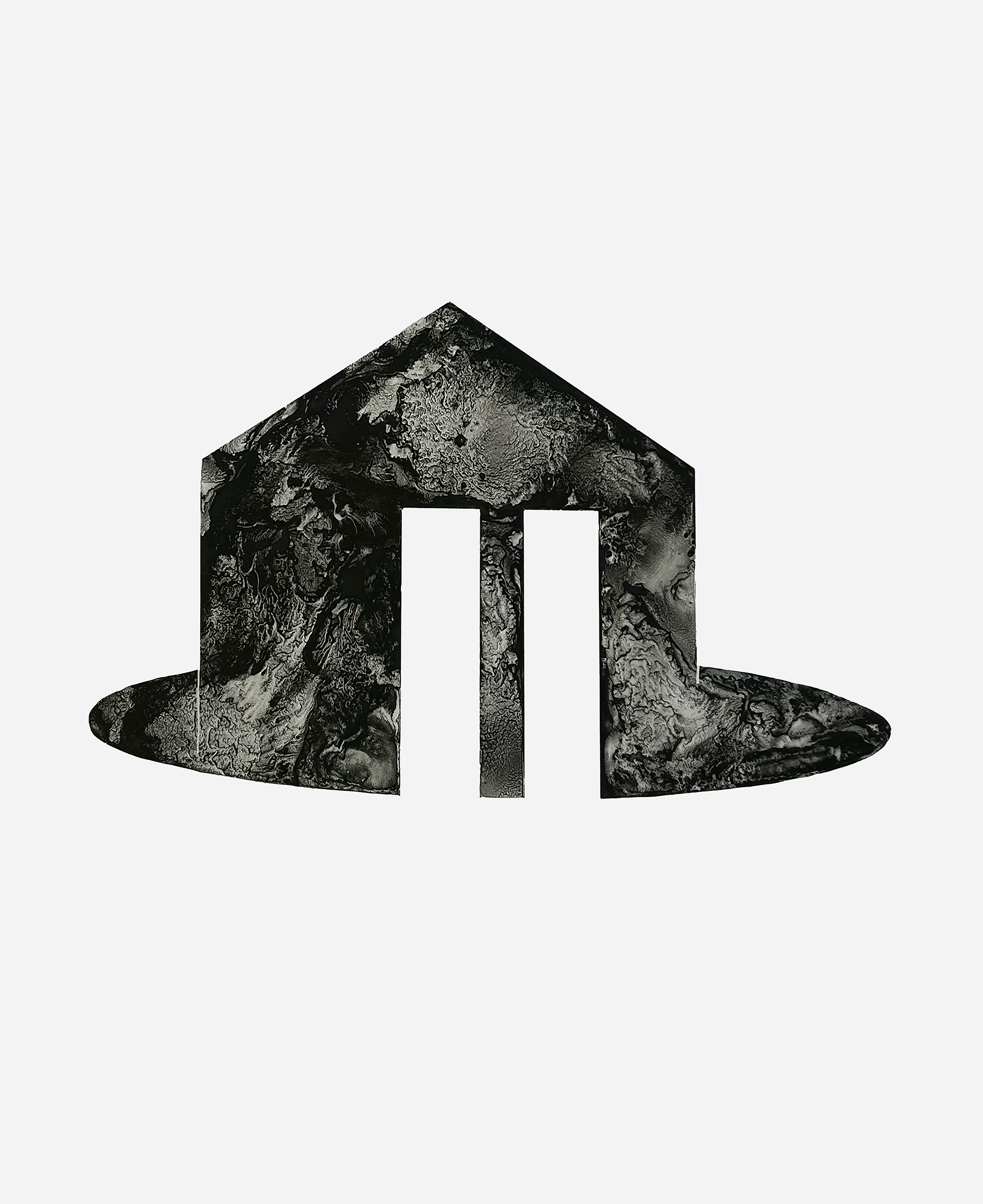
Diapirisme
grisaille on glass
49cm x 60cm x 0,4cm
Diapirism comes from the Greek diapeirein, “to pierce through.” In geology, it refers to the upward movement of deep-seated material through the layers that cover it. Here, the form of a house emerges from a circle; it seems both to rise and to sink, without it being clear in which direction it is moving. I return to the recurring engram of the house in its most elementary form, the one we draw as children. Two doors, which could just as easily be windows, are mixed into a mass of stone. We continually try to make a home, to find our centre, to grow a reassuring point of reference. Sometimes it holds, sometimes it does not. An almost burlesque dimension also appears: that of a flying saucer, and the idea that we project even the form of a house beyond our own ground.

Apertum
grisaille on glass
63cm x 45cm x 0,4cm
Apertum, from the Latin aperire, “to open, uncover, reveal,” refers to what is open, accessible, or exposed to view. Today, our homes seem to open up ever more: walls become glass expanses, the gaze passes through façades and reaches outside. Yet we also inhabit protected spaces, cocoons that separate us from our surroundings. In this piece, I construct a space caught within this contradiction. I fold, unfold, and refold it onto itself, opening views outward while creating spaces of retreat. The piece thus becomes simultaneously open and closed, turned towards the outside while folded back into its own interior.


Fraisils cénotaphes
3D modelling
collaboration Vincent Groetzinger
film collaboration: Salim Guennoun
Fraisils: ash from incompletely burned coal. Cenotaph: a monument erected in memory of a deceased person, from the Greek kenos, “empty,” and taphos, “tomb.” This film presents a landscape composed of street furniture and installations designed to prevent homeless people from settling down or finding a place to sleep. These objects are depicted in a precious, luminous manner, reminiscent of sacred, iconic images, in order to convey the contrast with the violence of what is denied to those who have already lost everything, and who are denied even access to emptiness.
2023


La grève
grisaille on glass
60cl x 80cm x 0,4cm
25cm x 20cm x 0,4cm
2022-2023
A grève (from the Late Latin grava, “gravel”) is a foreshore, the stretch of shore where the sea leaves what it carries. Walking lies at the heart of my life. I love feeling the shift from one step to the next, the vertical tension, the contemplation of places and living beings in motion—in cities, but above all in the mountains, along ridgelines, and on the coast. There is, in this painting, a frozen instability, also inspired by my conversations with Aurélien Barrau and by the text he kindly wrote for me, Free Fall, Shared Fall.


Le Tapis de verre
installation au sol
12 engraved glass panels
50cm x 50cm x 0,4cm
Le Tapis de verre connects me to a long tradition of craftsmanship, between the intimate space of the home and the ornamental objects of grand interiors, where personal and collective histories intertwine. Each panel contains the silhouette of a vase originating from different continents and periods. Left empty, it reflects the light and the forms surrounding it. Engraved onto these vases are garden plans drawn from different periods. Between the flatness of the carpet and the volume evoked by the vases, the installation proposes a form of archaeology in which forms and histories come together.
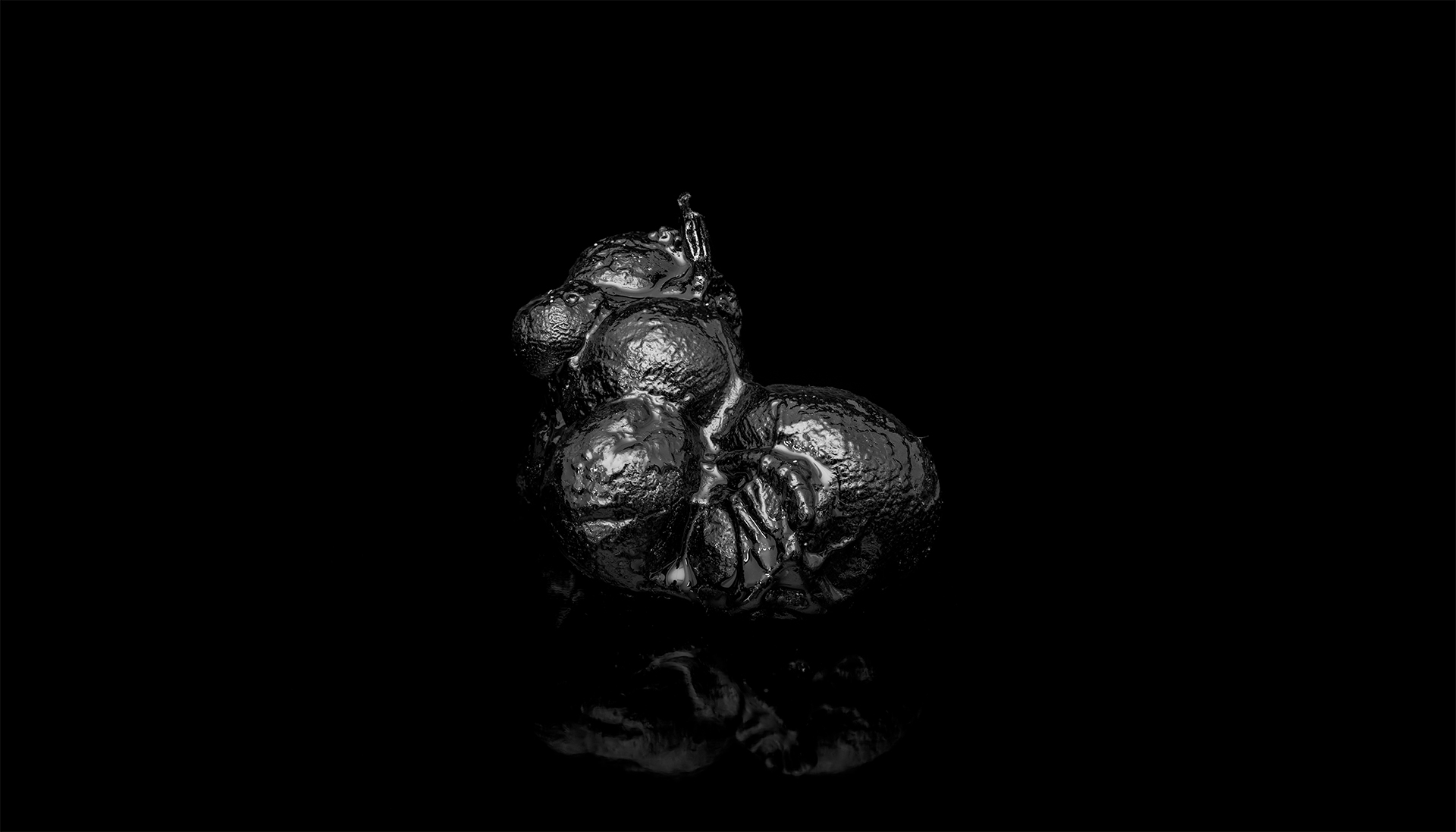
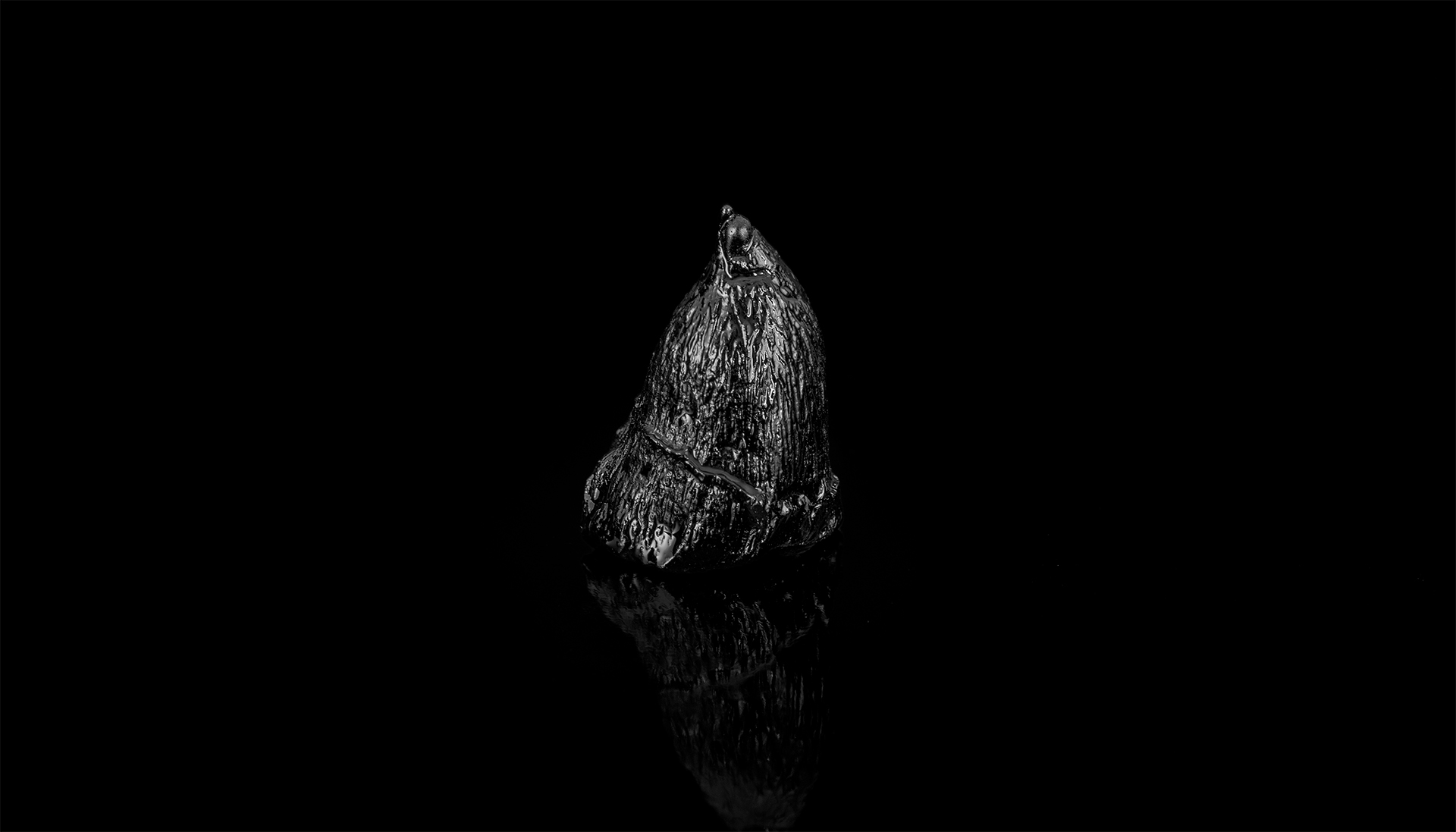
Phylogénie 2
tirage unique pro pigmentaire premium
diptyque 122,5cm x 70cm
object collaboration Anaëlle Pann
photographic collaboration
Damien Arlettaz
Phylogeny combines the Greek phûlon, meaning “lineage” or “species,” and genesis, meaning “origin” or “formation”: it refers to the history of transformations and relationships among living beings. Phylogeny 2 is based on casts of flower tubers, the underground and usually invisible organs of plants. The work stems from a curiosity about plant communication, forms of mutual support, movement, and their capacity to adapt. Enlarged and removed from their context, these forms become enigmatic, almost monstrous, like hidden organs whose function remains unclear. I want to preserve this uncertainty: not knowing exactly what we are looking at, while sensing a form of power within what appears fragile.
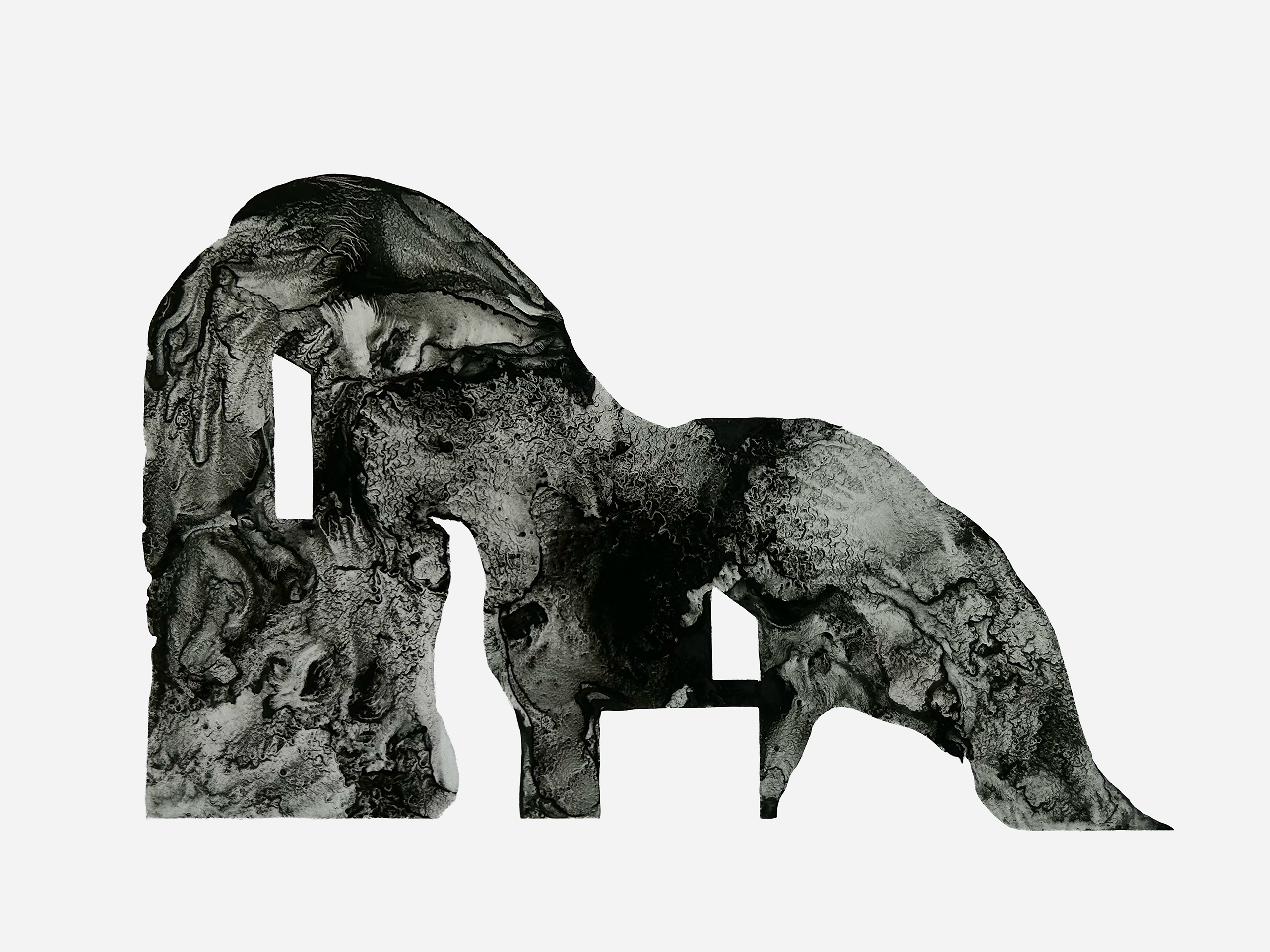
Les champs de brèches
grisaille on glass
polyptych
variable dimensions
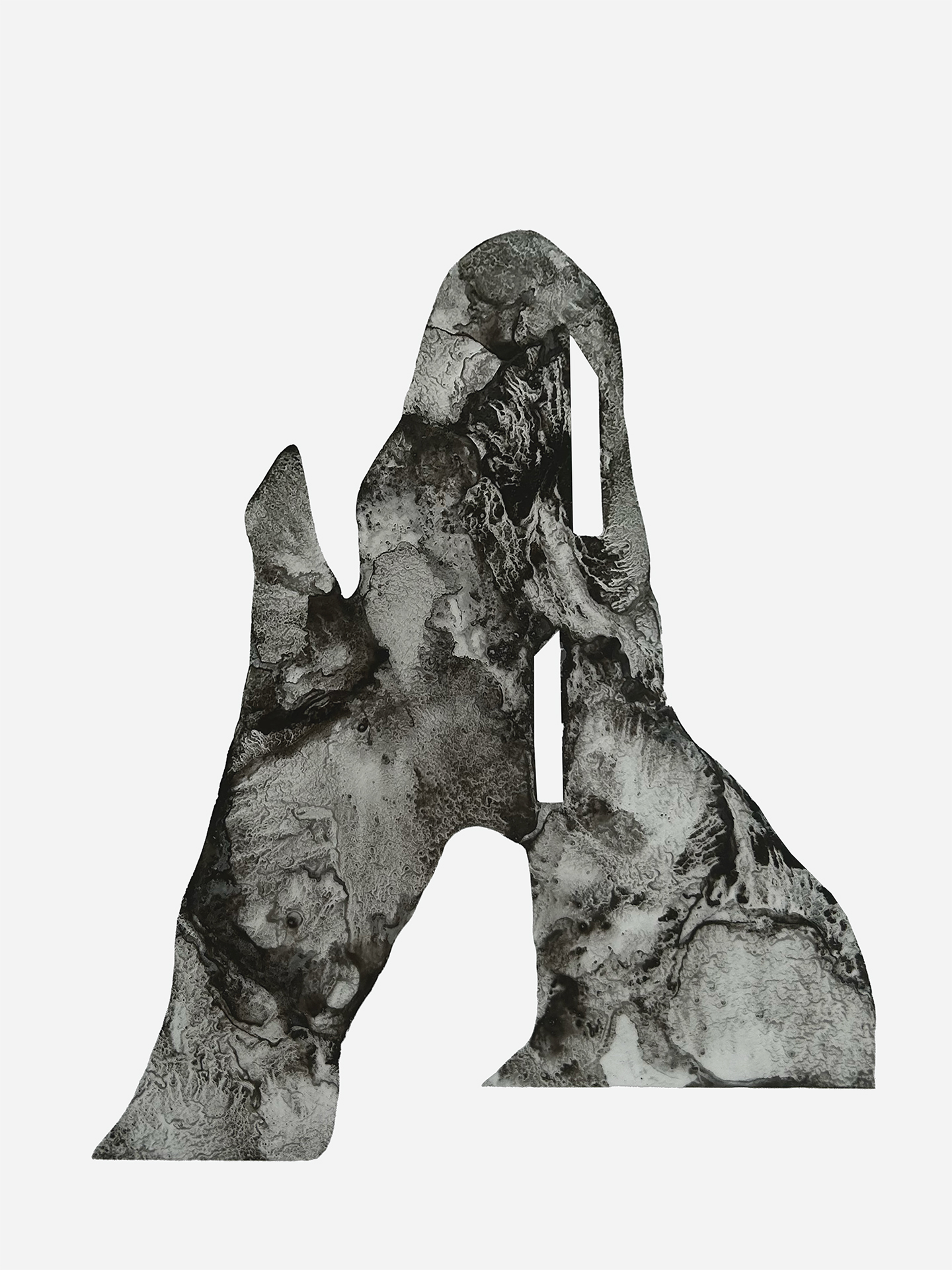
Champ comes from the Latin campus, “plain, flat ground, open expanse.” Brèche comes from the Old French breche, derived from the Frankish breka, “break, fracture”; in geology, the term refers to a rock composed of angular fragments bound together. Combined, the two terms form a kind of ground, an irregular expanse from which shapes seem to emerge. Champs de brèches thus proceeds through a form of pareidolia: a cave, animals resembling cave drawings, soft forms, others like children’s toys simply carved from wood. The field then becomes a surface on which different apparitions become possible.


Flore armet
grisaille on glass
polyptych
variable dimensions
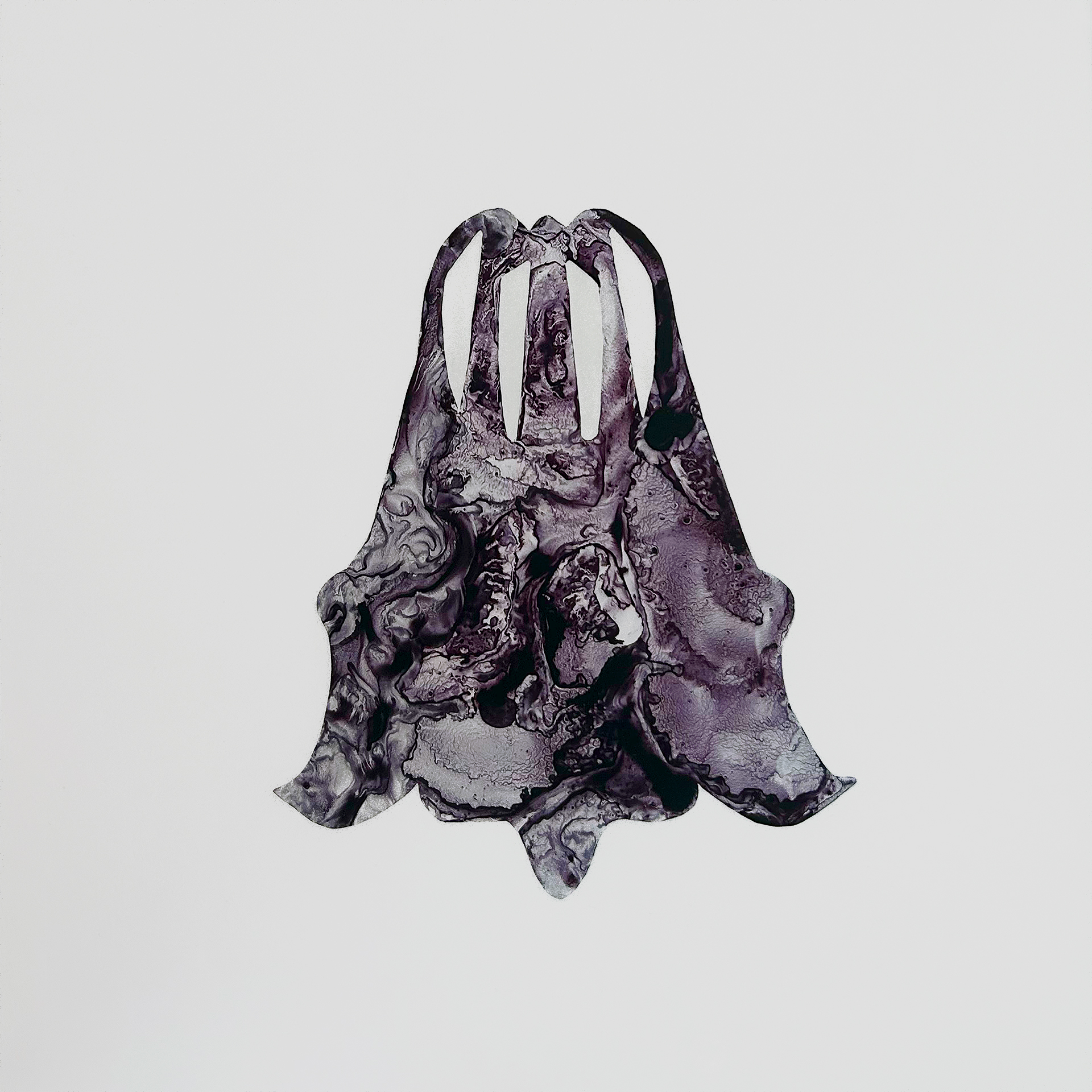
With Flore Armet, I begin a glass herbarium. The title brings together Flora, the Roman goddess of flowering, and the armet, a war helmet that appeared in the fifteenth century. The specimens I compose thus evoke both plant life and weapons. Gardens and plants are among the earliest motifs represented by humans and run throughout our history of images. This work on glass belongs to this impossible tradition of preserving a perfect imprint of the living. Faced with what we transform, control or destroy, there remains the idea that flora will, one way or another, find a way to outlive us.

Establir
grisaille on glass
37cm x 30cm x 0,4cm
Éstablir from Old French, derived from the Latin , “to make stable, to strengthen,” itself formed from stabilis, “stable, firm.” At its root, stare means “to stand upright.” In this piece, a single structure may recall the forms of a school or church bench, a workbench, or a domestic table. I construct the different elements like pieces of a puzzle that one instinctively wants to fit together. Yet their forms prevent them from being assembled. The table leg corresponds to a shape subtracted from the benches, but its position beneath the tabletop would cause it to tip over. The function seems close, graspable, yet remains impossible.
2022


Ascension lithique
polyptych
5 grissaille painting on glass
40cm x 60cm x 0,4cm
Having moved many times, I have always been intrigued by the image of the church steeple. I found it strange that these more or less pointed forms could constitute a language addressed to the sky, a kind of outward hostility that nevertheless contains aspirations towards the sacred. As an agnostic, I appropriated them as mountain ridges enclosing caves. The steeples thus become flints, recalling the earliest tools while evoking a range of styles specific to different communities and localities. Stable, as if displayed in an armoury case, they oscillate between architecture, tool and mineral form.


Labiles assuétudes
grisaille on glass
polyptych
Variable dimensions
Labile comes from the Latin labilis, “slipping, falling,” and refers to what is susceptible to change. Assuétude, from the Latin assuetudo, refers to habit, to what one gradually becomes accustomed to. The piece evokes the way habits grow upon one another from generation to generation. Each person retains something of their own structure while taking on something from others—from elders, loved ones, and those alongside whom we learn to live. These habits settle, accumulate, and shape us. They remain at once deeply rooted and vaporous.
Before
Phylogénie 1
photography
unique carbon print
40cm x 80cm
object collaboration Anaëlle Pann
photographic collaboration
Flora Fanzutti
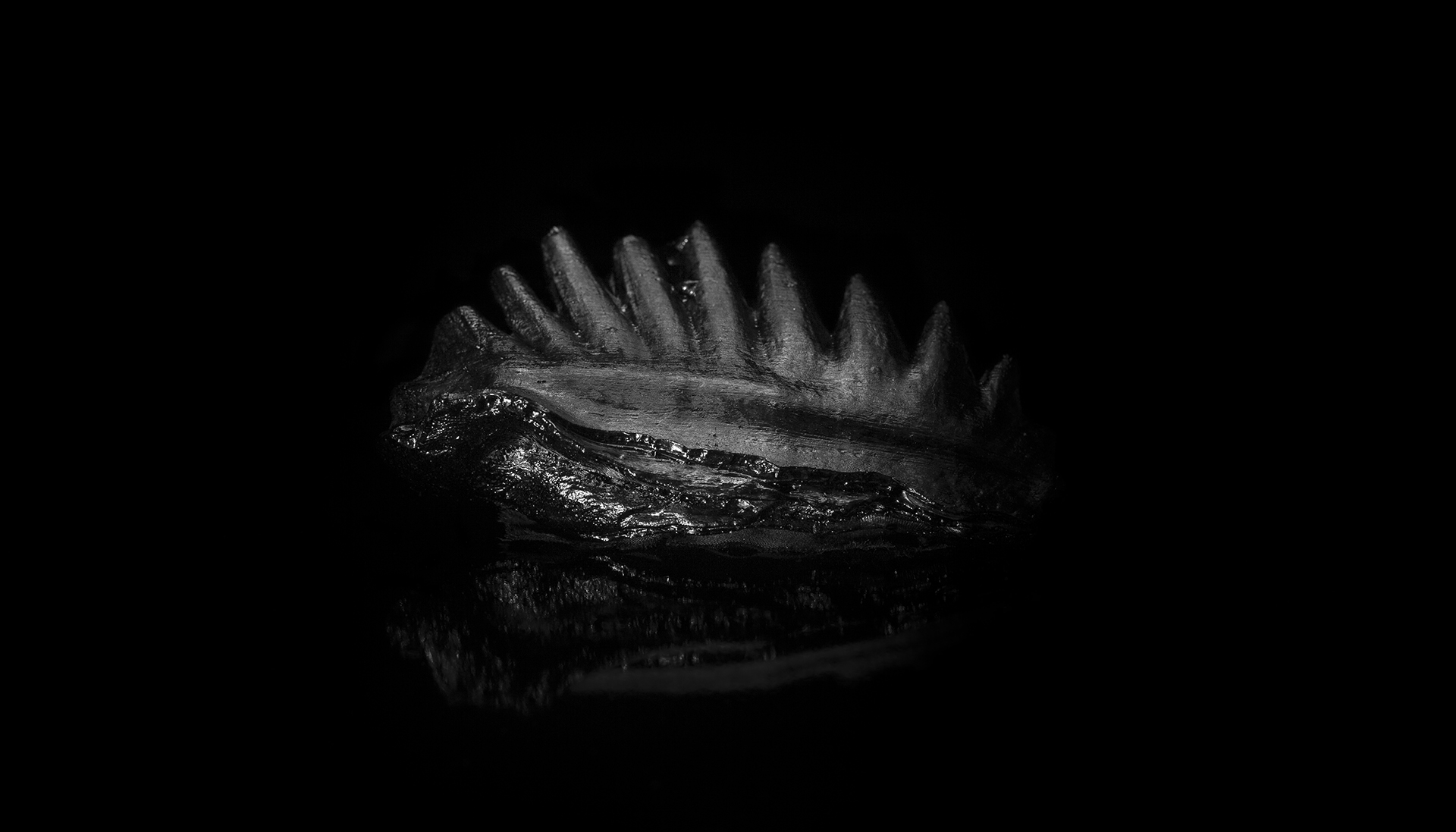
Phylogeny 1 grew out of an encounter with Nicolas Goudemand around conodonts, aquatic organisms whose fossilized teeth can be used to date rocks. He spoke of the need to work through the hand in order to recognize and classify species: how does handling contribute to thought? I enlarged one of these forms several thousand times and made it in glass, turning a tool used to date the landscape into a landscape itself. The object remains within a black box: it exists but is not shown. Only one viewpoint appears, sculpted by light, like a distant rock at sea, its contours uncertain.

Chute libre – Chute liée
grisaille and engraving on glass
40cm x 60 cm x 0,4cm
Two monoliths face one another, like two touches, two moments, two weights placed within the same space. Between them, the transparency of the glass opens up a divide: a void to be crossed, even as the forms appear stable, almost immutable. The piece is built around this tension between support and passage, rigidity and tipping. It evokes standing at the edge of a threshold, then momentarily crossing what cannot be resolved. Thought sometimes proceeds in this way: it weaves together complex areas, connects distant points, and moves forward by drawing support from the gaps between them.


Ecotone de la psyché
grisaille and engraving on glass
variable dimensions
In this series, I explore the relationship between the subject and architecture as a way of giving form to what moves through us. Feelings compose a kind of inner sea, shifting and unstable, within which certain forms become points of anchorage. The angular areas I leave within the grisaille appear as safe harbours or places of refuge. Stable and recurring, they outline places to return to, from which to observe what surrounds us and what moves through us. Architecture thus becomes less a boundary than a way of locating ourselves within this inner geography.